
Water quality
Is Macomb County water hard? What it means for your plumbing
Hard water in Macomb County is real but moderate for homes on Great Lakes Water Authority water. Here's what the hardness numbers mean and what they do to your water heater, a tankless unit and your faucets.
By Plumbers in Macomb, MI · Published · Last updated
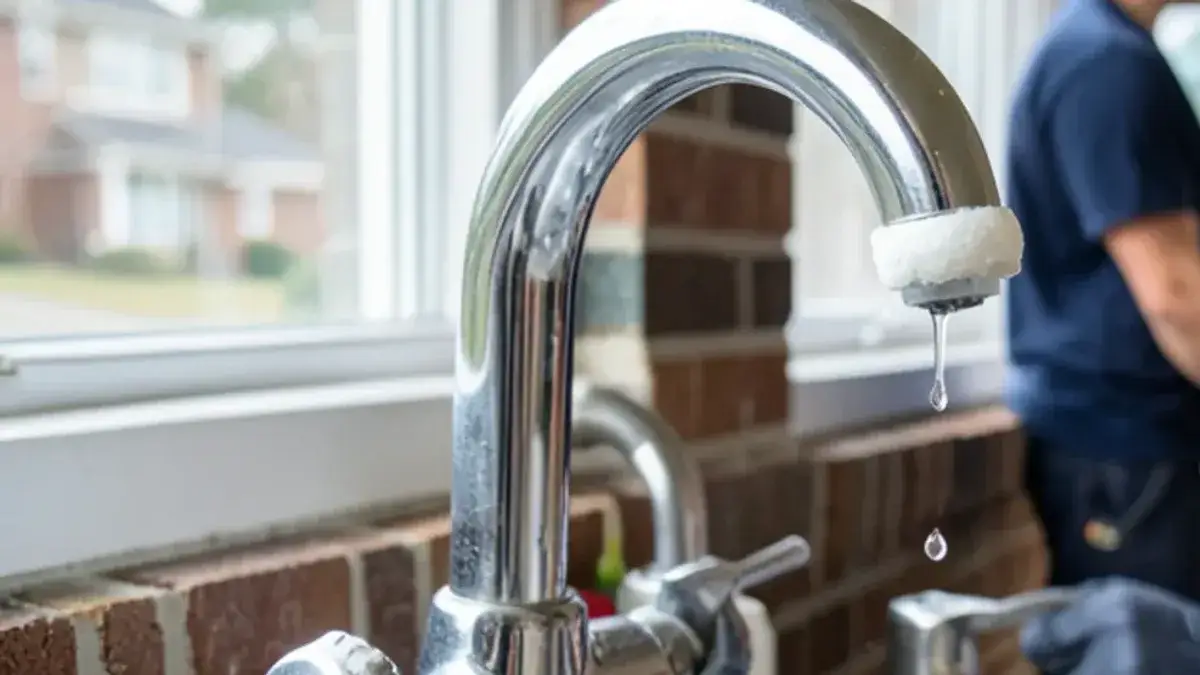
Yes, moderately. Homes on Great Lakes Water Authority water in Macomb County get Lake Huron water that averaged 99 to 105 mg/L of hardness in recent reports, about 5.8 to 6.1 grains per gallon. That slowly scales water heaters, tankless units and faucet aerators, but it rarely makes a softener a must.
How hard is the water, in numbers?
Macomb Township buys its water from GLWA's Lake Huron Water Treatment Plant. The township's 2024 water quality report lists total hardness at an average of 99 ppm for the year, with a low of 88 and a high of 106. Divide 99 by 17.1 and you get roughly 5.8 grains per gallon.
Chesterfield Township's 2025 report shows the same Lake Huron plant averaging 105 mg/L, about 6.1 grains per gallon. So the number moves a little year to year, but it stays in the same band. Calcium makes up most of it, with some magnesium.
Want help deciding if a softener is worth it for your home?
- Your call goes to an independent local plumbing company that does the work.
What the hardness scale says
Water reports use ppm or mg/L, which are the same thing. Softener sales literature tends to use grains per gallon. Here's how the common scale lines up.
| Category | mg/L (ppm) | Grains per gallon | What you'd notice |
|---|---|---|---|
| Soft | 0 to 60 | 0 to 3.5 | Little or no scale |
| Moderately hard | 61 to 120 | 3.6 to 7.0 | Spots, slow scale on aerators and heaters |
| Hard | 121 to 180 | 7.1 to 10.5 | Steady scale, more heater and fixture upkeep |
| Very hard | Over 180 | Over 10.5 | Heavy scale, a softener usually pays off |
Lake Huron water at 99 ppm sits in the middle of the moderately hard band. If a sales pitch quotes something like 15 or 20 grains for city water in Macomb Township, ask where the number came from. It doesn't match the township's own report.
What moderately hard water does inside your plumbing
Water heaters
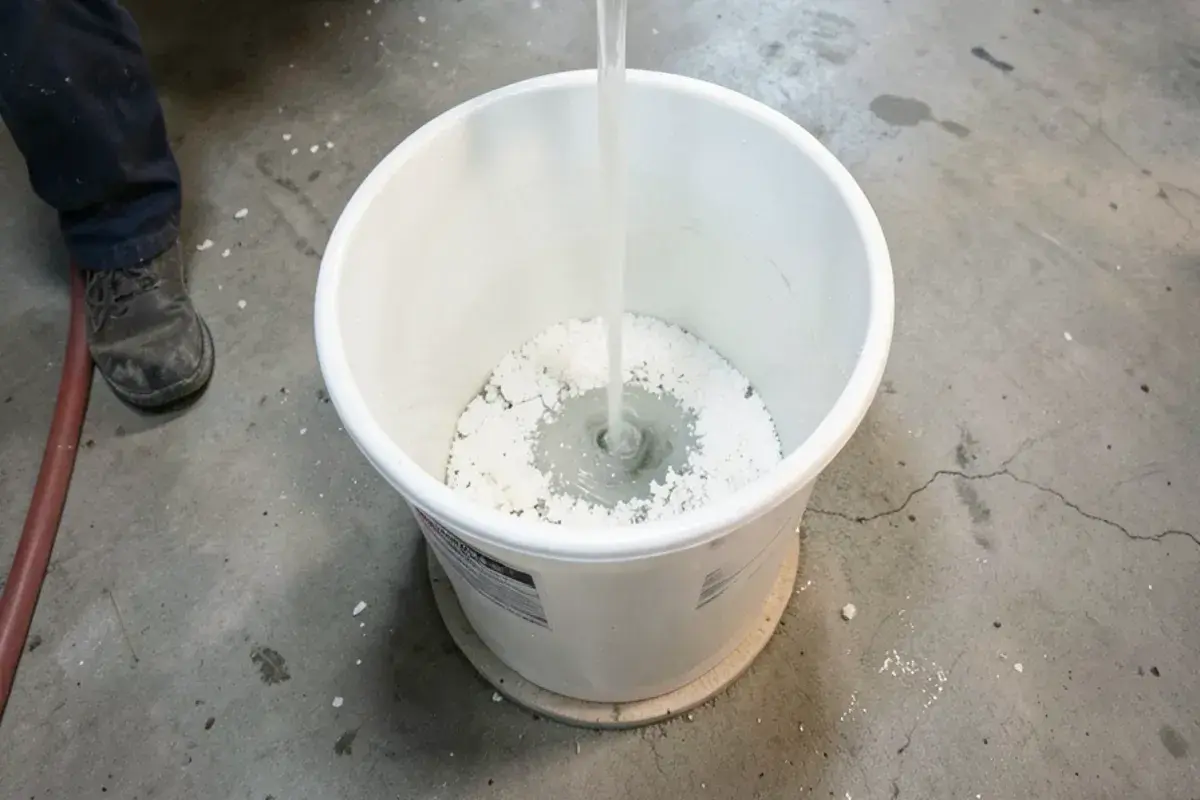
Heat pulls calcium out of solution. Inside a gas tank that calcium drops to the floor of the tank as gritty sediment, and the layer insulates the water from the burner. You hear it as popping or rumbling, and the tank takes longer to recover. In an electric tank the lower element gets a crust of scale and eventually burns out. Draining a bucket or two through the tank's valve each year keeps the layer thinner, and a sediment-related failure is one of the more common reasons a homeowner ends up needing water heater repair.
Tankless units
A tankless heat exchanger has small passages that heat water quickly, so scale builds there faster than in a tank. Flow drops and the unit starts showing scale or overheat codes. Periodic descaling handles it at this hardness. Owners on well water may need to do it more often.
Faucets, showerheads and fixtures
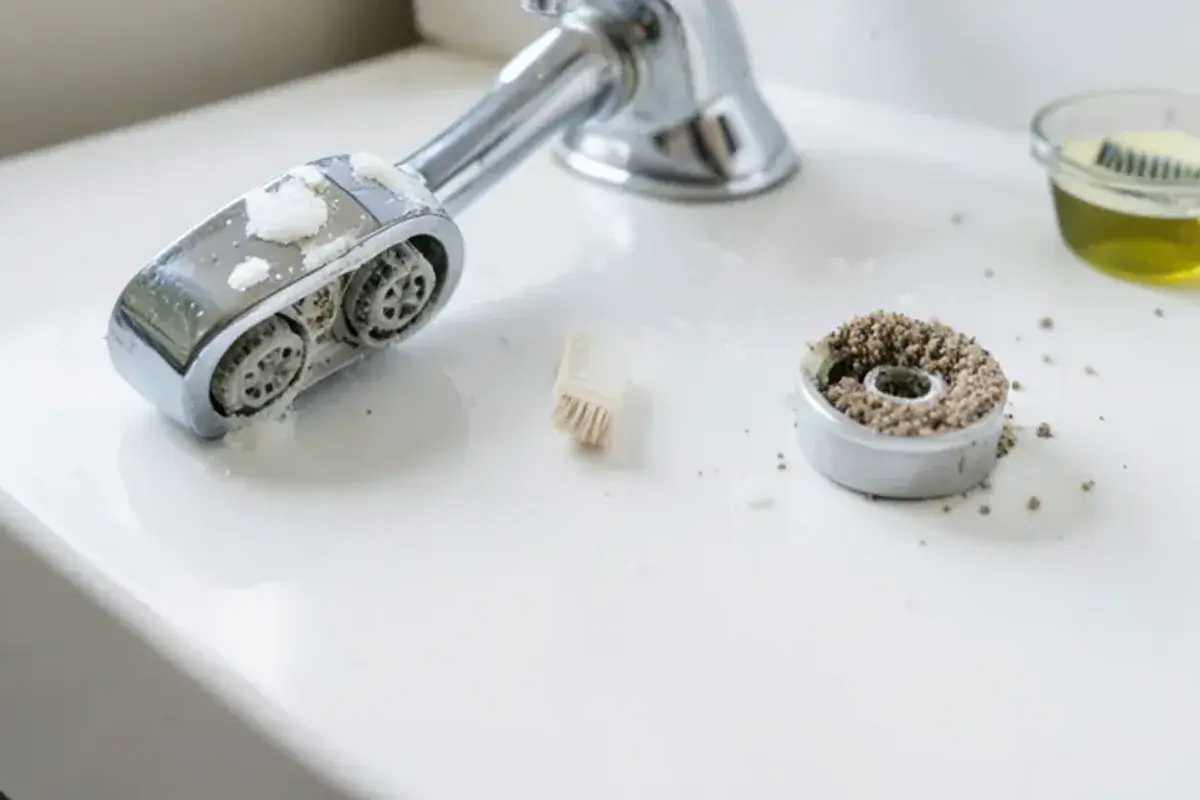
Moderate hardness shows up first at the points where water sprays or evaporates. Aerators plug, showerhead nozzles close up, and a white ring forms around the base of the faucet. Faucet cartridges get stiff, toilet fill valves get sluggish, and glass shower doors spot. Soaking aerators and showerheads in vinegar takes care of a lot of it. Cartridges and valves that bind or drip are a job for faucet repair and replacement.
City water and private wells in north Macomb County
Most of the county's suburban core is on GLWA water, including Macomb Township, Sterling Heights, Shelby Township, Chesterfield Township and Washington Township. Their hardness tracks the Lake Huron plant.
A few places are different. Mount Clemens and New Baltimore run their own treatment plants on Lake St. Clair, and Mount Clemens's report describes its lake water as soft compared with the hard well and river water the city used long ago. In Romeo, the village's water comes from groundwater wells. Farther out, Ray Township houses draw from private wells, which the Macomb County Health Department permits, and part of Lenox Township is likely the same.
The City of Richmond shows how far groundwater can sit from lake water. Its seven city wells reported total hardness of 207 mg/L, about 11.7 grains per gallon, roughly double the Lake Huron figure, and the city adds polyphosphate at each well to hold iron and limit corrosion. A water heater in a Richmond basement sees a very different load than one in Sterling Heights.
Well water has no annual report from a township. Its hardness, iron and other minerals can differ a lot from GLWA water and from the well next door. If you're on a private well, a water test is the starting point for any treatment decision.
When a softener is worth it
At around 5.8 grains per gallon, a softener is optional. It's often worth it when:
- you have, or plan to install, a tankless water heater
- you're on a private well that tests hard
- you see heavy scale on fixtures, or you're replacing elements and cartridges often
- you want softer water for laundry, skin or glassware
It's harder to justify if you're on township water, have a gas tank you flush, and only notice light spotting. A softener needs space near the main line, a drain for its regeneration cycle, salt or potassium refills, and a bypass for service. Most installers leave outdoor spigots on hard water. Our water softener and filtration page explains sizing and the alternatives, including scale-reduction cartridges.
How to read your community's water quality report
Each community water system publishes an annual report, usually posted on the township or city website. Here's how to find what matters for hardness:
- Check the source section to see which plant or wells supply your water.
- Find the mineral analysis table, often labelled "tap water mineral analysis."
- Read the total hardness row and note the average and the range.
- Divide the mg/L figure by 17.1 to get grains per gallon.
- While you're there, read the lead and copper section and the service line notes.
If your community's report doesn't list hardness, it may show it for the source plant in a neighboring system's report. A home test kit or a lab test gives you your own tap's number.
What plumbers find in Macomb County homes, and what a softener can't fix
On GLWA water, the hard-water problems plumbers see most are slow ones. A gas tank that has never been drained can carry a thick layer of white sediment by year ten, sometimes enough to bury the drain valve so it barely flows. An electric tank's lower element fails with a shell of scale on it. Tankless units throw scale codes a few years in when nobody has descaled them, and faucet cartridges bind long before the faucet body wears out.
A softener changes what comes in next, and that's all. It won't dissolve the sediment already sitting in a tank, so an old heater with a thick layer still needs a flush, or replacement if it's leaking. It won't reopen a clogged tankless heat exchanger without a descale first. It doesn't fix low pressure from old galvanized pipe, which is corrosion, not lake minerals.
There are trade-offs on the install side too. A softener needs a bypass so you can service it, a drain for regeneration run through an air gap, and room near the main line ahead of the water heater. Many plumbers check the heater's anode rod more often on softened water, because it tends to wear faster. And the scale-reduction cartridges sold as softener alternatives limit scale on hot surfaces without removing any hardness, which suits a tankless unit on township water better than a well at 11 grains.
Deciding what to do about the water in your house
Start with your own number: the report for your system, or a test if you're on a well. At around 6 grains, regular flushing and descaling may be all a house needs. Above roughly 7 grains, the threshold some state health agencies use, or with a tankless unit, a softener earns its space. If you'd like a plumber to look at scale on your heater or talk through a softener, call (207) 419-2600 and we'll connect you with one who covers your part of Macomb County.
Common questions
Is 5.8 grains per gallon hard water?
Yes, moderately. On the common scale, 61 to 120 mg/L counts as moderately hard, and Macomb Township's 2024 average of 99 mg/L converts to about 5.8 grains per gallon. You'll see some scale on aerators and in a water heater over the years, but it's far from the 11 or more grains that some north county wells produce.
Do I need a water softener in Macomb Township?
No, not as a rule. Many homes on township water get along fine without one, since Lake Huron water sits in the moderately hard band. A softener makes more sense if you have a tankless heater, you're seeing heavy scale on fixtures, or you want softer water for skin, laundry and glassware. Homes on private wells should test first.
Will a water softener remove lead or bacteria?
No. A softener trades calcium and magnesium for sodium or potassium through an ion-exchange resin. It isn't a treatment for lead, bacteria, PFAS or other contaminants, which call for filters or systems certified for those specific uses. If your community's report lists lead or unknown service lines, check the line itself before buying any treatment.
How often should a tankless water heater be descaled on Macomb County water?
Once a year is a common starting point on GLWA water at about 6 grains per gallon, but the manufacturer's manual sets the schedule your warranty expects. Homes on well water at 11 grains or more often need it more frequently. Falling hot water flow or a scale warning code means it's due now, whatever the calendar says.
Where we can help
Want help deciding if a softener is worth it for your home?
- Your call goes to an independent local plumbing company that does the work.