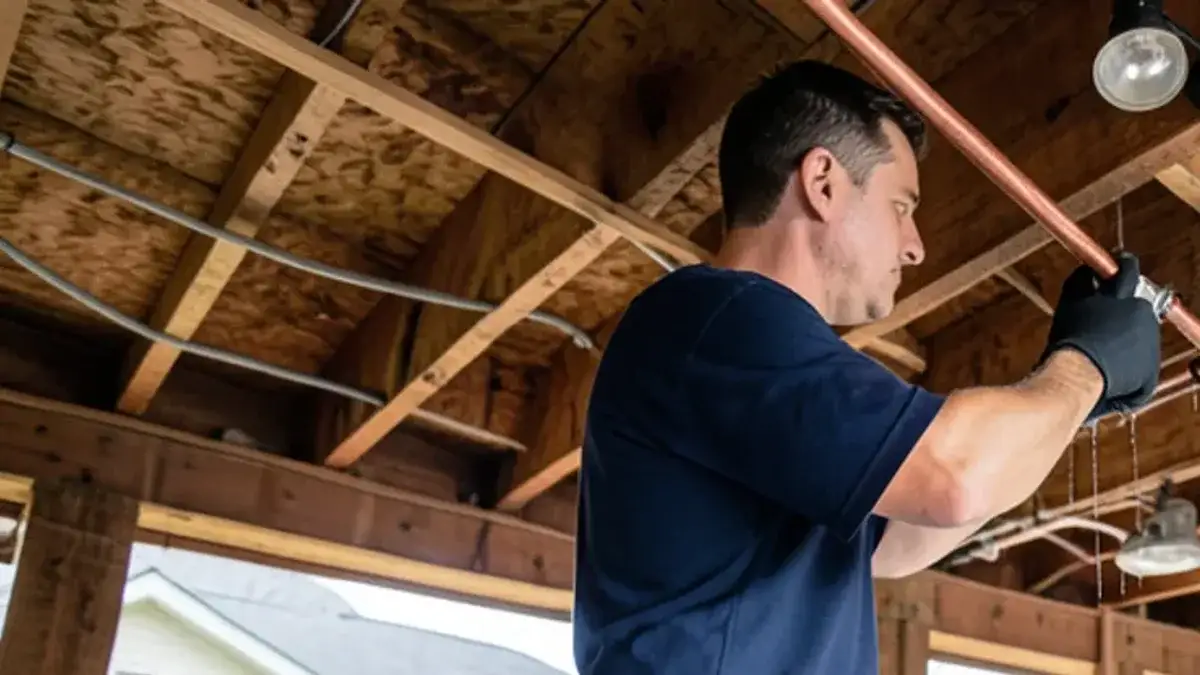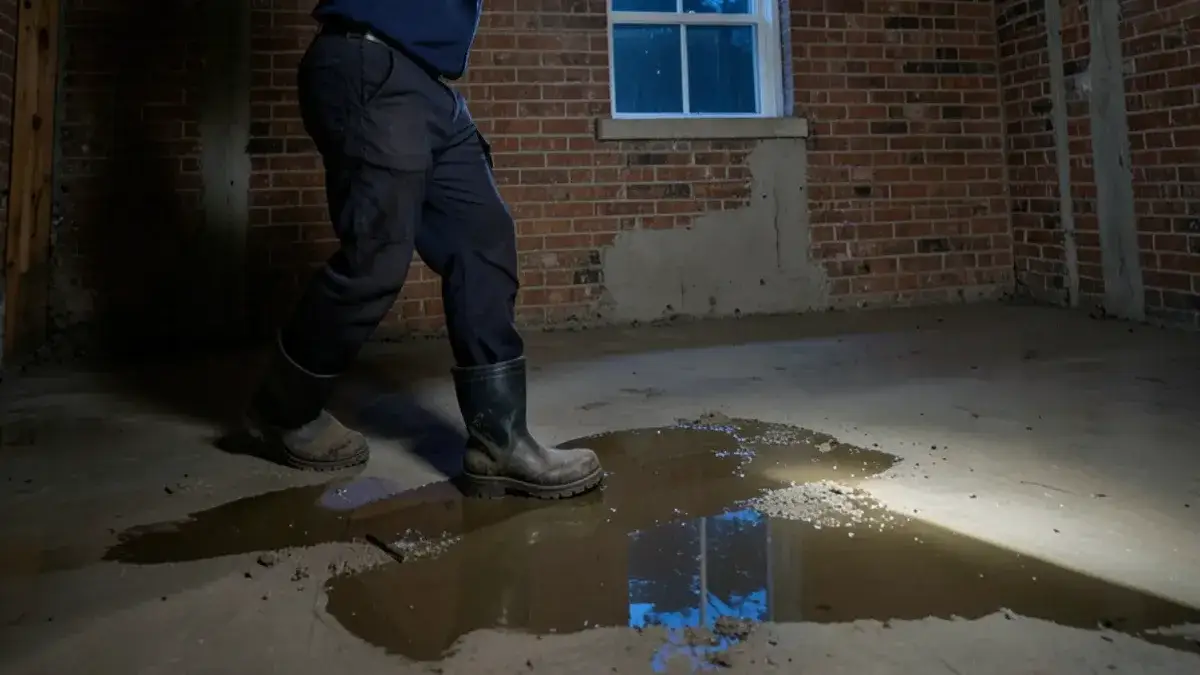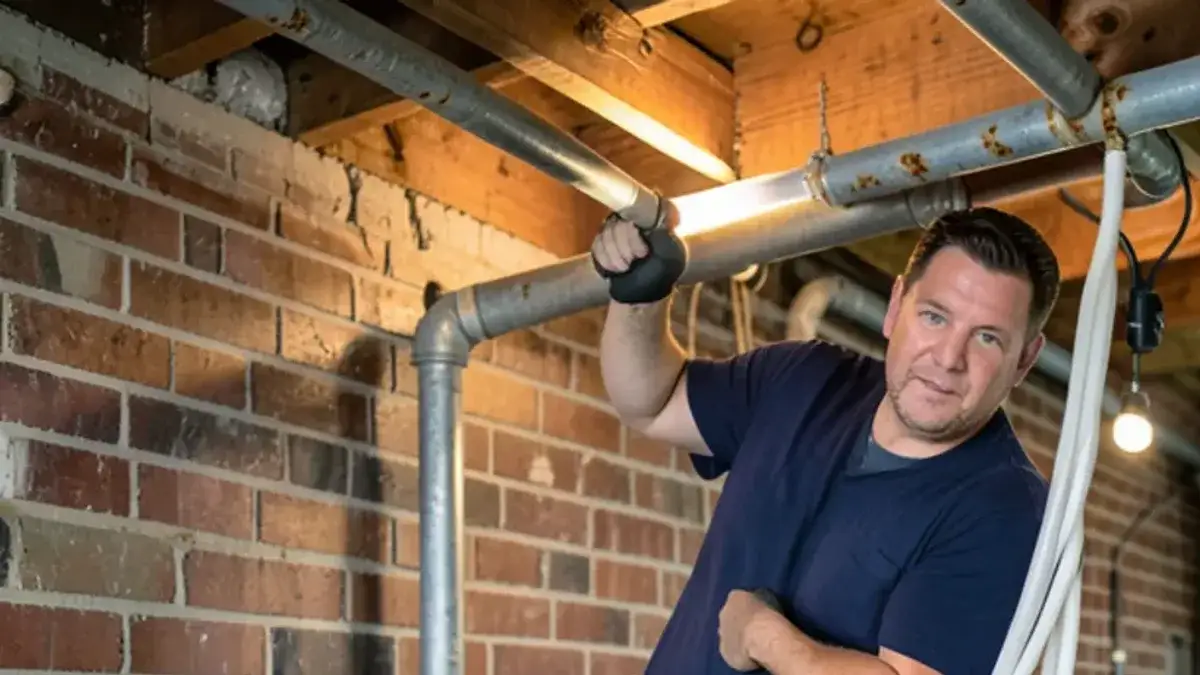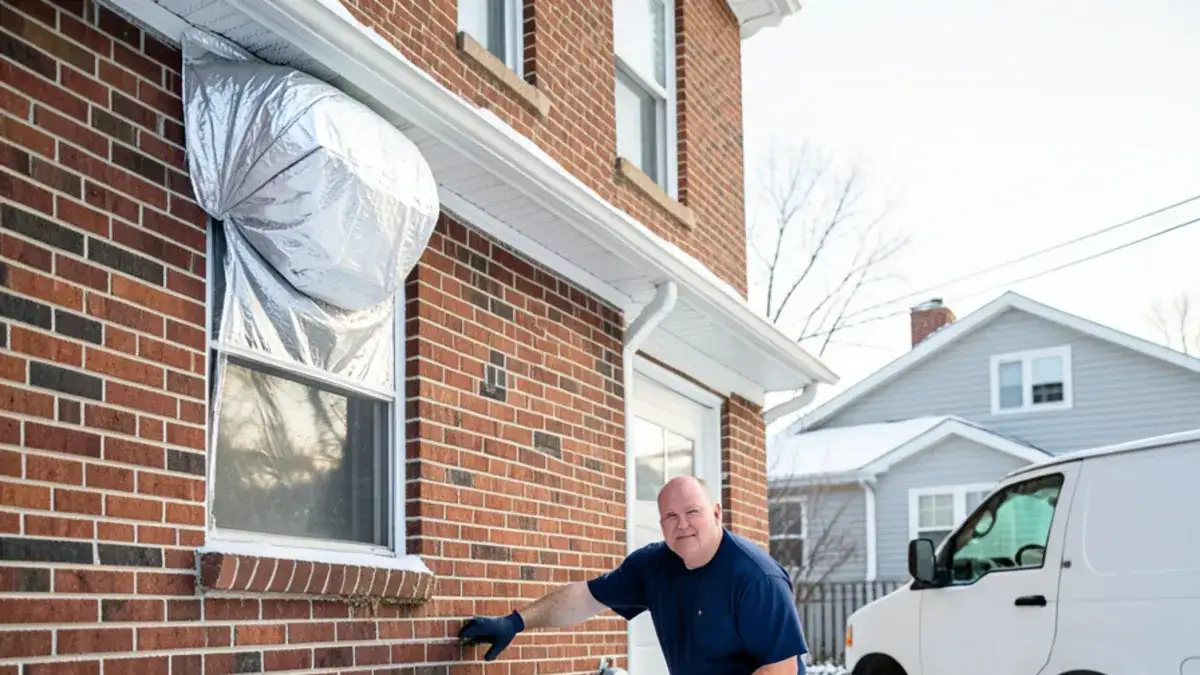
Here the trouble spots are kitchen lines on outside walls, attached garages and crawl spaces under additions.
What frozen pipe repair covers in a Macomb County home
Frozen pipe repair is two jobs that often arrive together: getting water moving again without hurting the line, and fixing whatever the ice split. The plumber you're connected with typically handles:
- tracing a dry fixture back to the frozen section and confirming the main shutoff closes
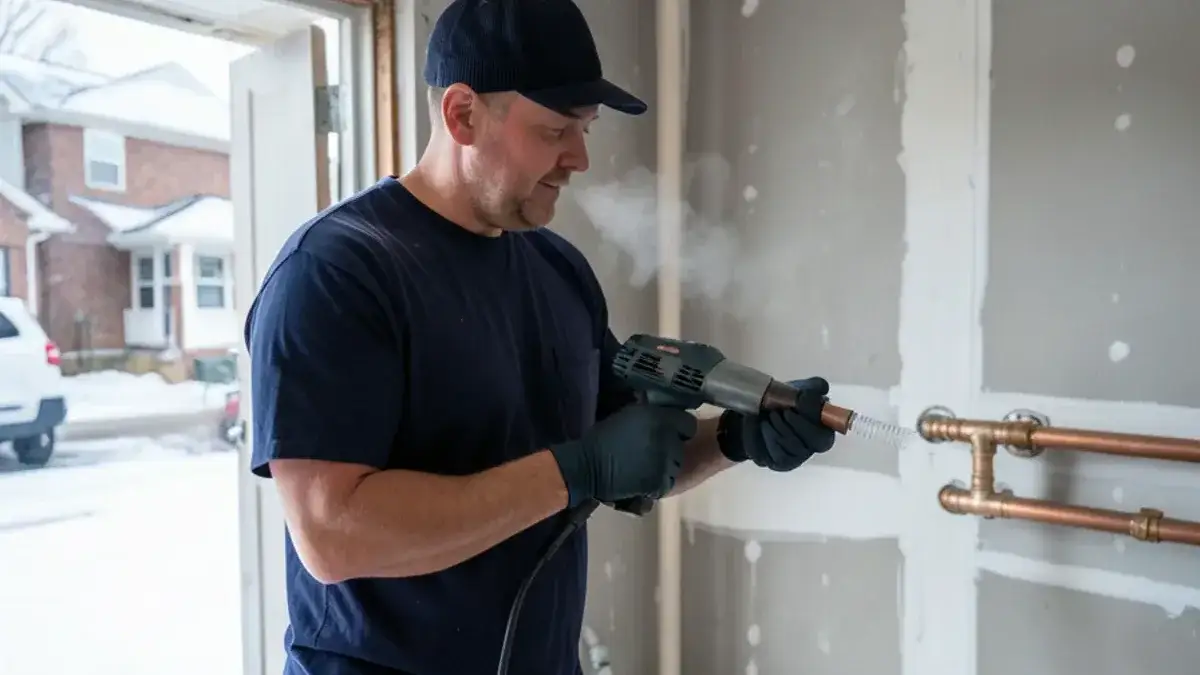
- thawing with controlled heat, such as warm air, a heat gun on low, a heating pad, or an electric thawing unit on metal pipe
- cutting out split or swollen pipe and joining in new copper or PEX
- moving a line that freezes every winter out of an exterior wall or garage ceiling
- insulating exposed runs, or adding self-regulating heat cable where rerouting isn't practical
Two things usually sit outside the job. The water meter generally belongs to the water department, so a frozen meter is their call first. Drying wet drywall, insulation and carpet is normally a separate restoration trade, and the EPA advises starting within 24 to 48 hours to limit mold, so ask about drying early.
Pipes froze and there's no water? What you're likely seeing
A frozen pipe rarely announces itself. Most people find out at the kitchen sink on the coldest morning of the year: the cold side trickles or stops, while the bathroom faucet down the hall runs fine. That pattern says the ice sits on the branch feeding that one fixture.
Other signs to look for:
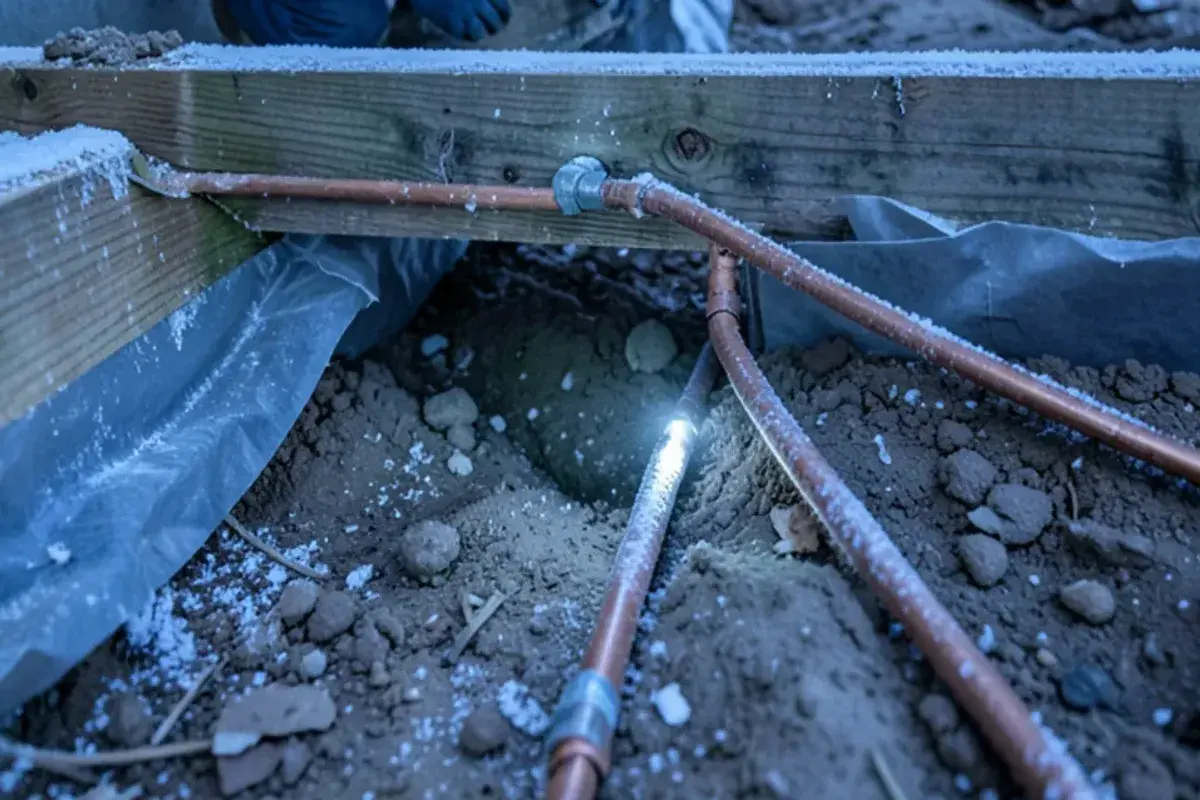
- frost or a white film on an exposed pipe in a crawl space or garage
- a pipe that looks swollen, or a fitting that's pulled apart
- a faucet that coughs air before any water comes
- no water anywhere in the house, which points to ice near where the service line enters or at the meter
- a damp patch on drywall along an outside wall once the weather breaks
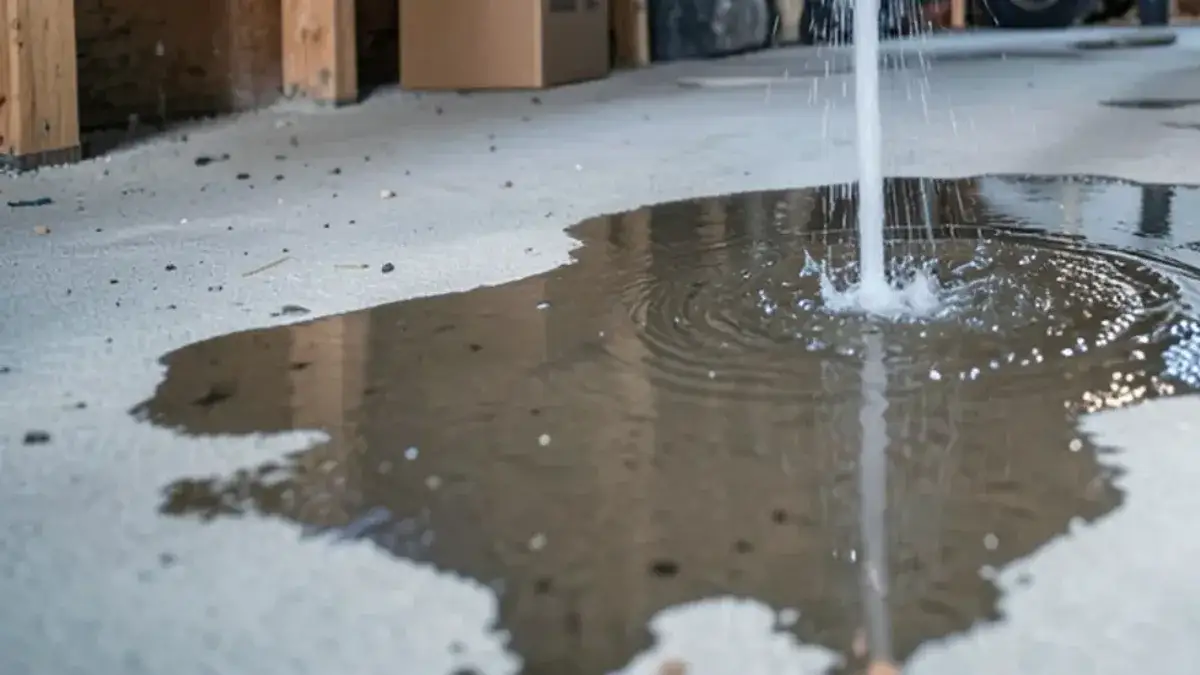
If water is already spraying, close the main shutoff and see our emergency plumbing steps. A pipe that's frozen but still intact is the better situation, and how it gets thawed decides whether it stays that way.
Pipe frozen solid or already split?
- Your call goes to an independent local plumbing company that does the work.
Which pipes freeze first in Michigan homes
When a Michigan cold snap settles in for several days, pipes in the middle of a heated house are rarely the problem. They freeze where outside air reaches them:
- Exterior walls. A kitchen sink under a window on an outside wall is the classic case, especially with the cabinet doors shut.
- Attached garages. Lines in garage walls or ceilings, or feeding a bathroom or laundry over the garage, sit in air far below freezing.
- Crawl spaces. Additions often sit over vented crawl spaces with gaps around the rim joist.
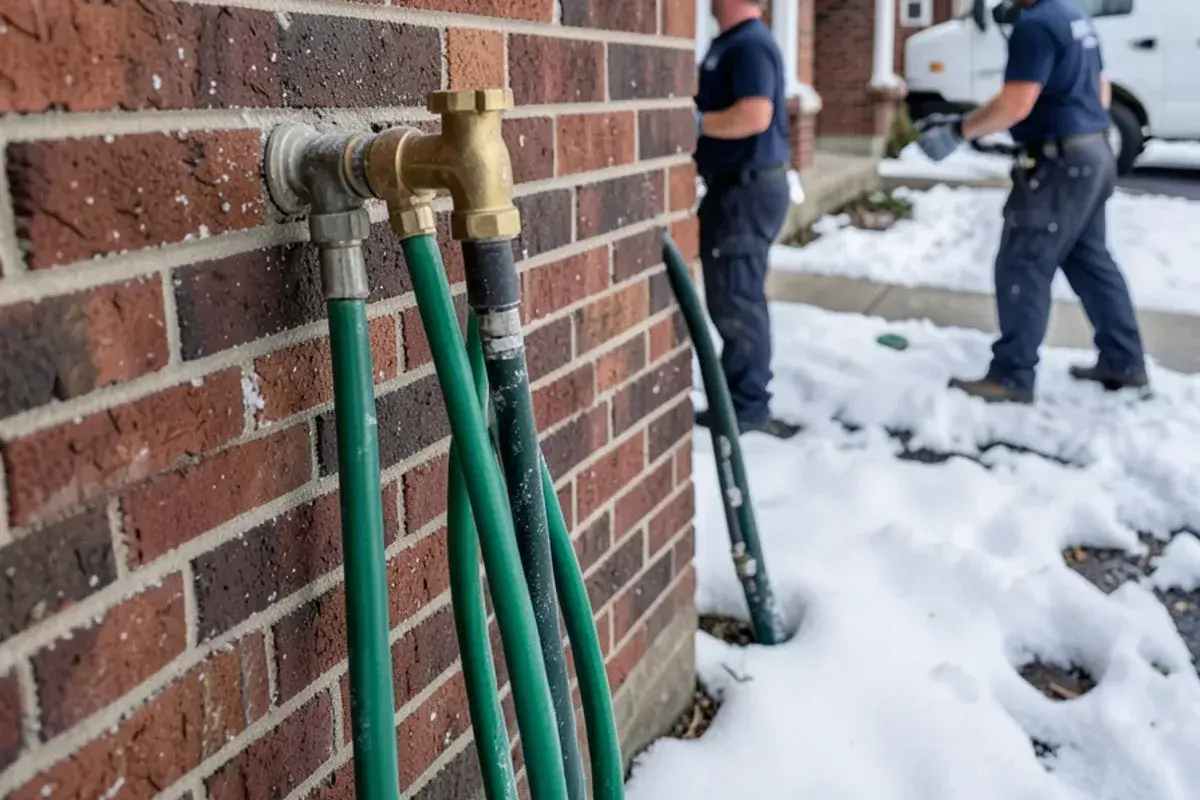
- Hose bibs. A frost-free faucet works only if the hose comes off in fall. Leave it attached and the trapped water splits the valve inside the wall, where nobody sees it until spring.
- The rim joist. Where supply lines run along the top of a basement wall, cold seeps in at the sill.
House age plays a part too. In Romeo, 44 percent of homes were built before 1960, according to Census estimates, and houses from that era often have additions, crawl spaces and thinner wall insulation than the newer subdivisions in Macomb Township. A buried service line is laid deep, so when one freezes it's usually at a shallow spot or the exposed section where the pipe enters the basement.
Frozen pipe prevention for Michigan winters
Michigan State Police advise insulating water lines along exterior walls. The Red Cross adds a few habits:
- Keep garage doors closed if water lines run through the garage.
- Open sink cabinet doors on outside walls during a cold snap.
- Let cold water drip from faucets served by exposed pipes when it's bitterly cold.
- Hold the thermostat steady day and night, and no lower than 55°F if you're away.
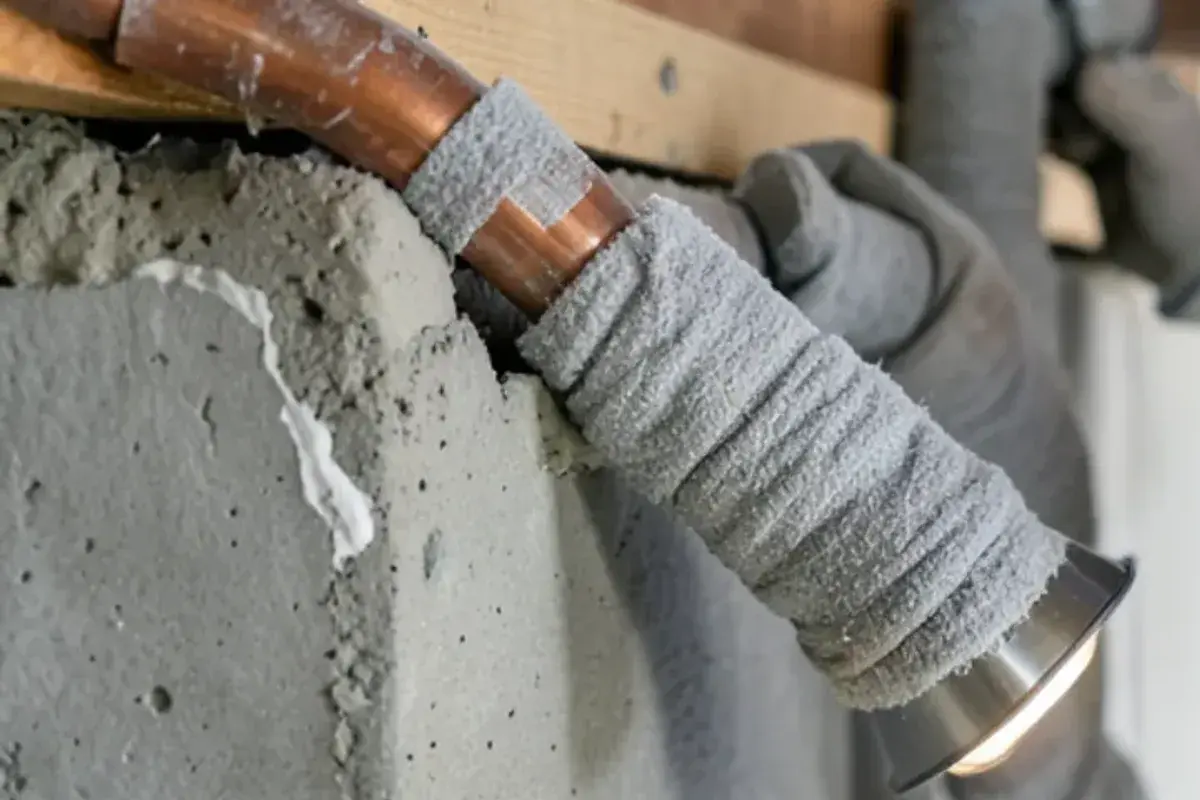
Before the first hard freeze, take hoses off and close the inside shutoff to each outdoor faucet. Our frozen pipe prevention guide for Michigan walks through the house room by room.
How a plumber can thaw frozen pipes safely
The plumber starts at the dry fixture and works back toward the main, checking each place the line passes an outside wall, garage or crawl space, and looking for bulges before any heat goes on. The faucet stays open so meltwater has somewhere to go.
The tool depends on what's reachable. Warm air pushed into an opened cabinet or crawl space is gentle and slow. A heat gun on a low setting or a heating pad works on exposed copper. For metal lines buried in a wall, an electric pipe thawing unit warms the pipe from the inside out; it isn't used on plastic pipe, and the home's electrical bonding gets checked first.
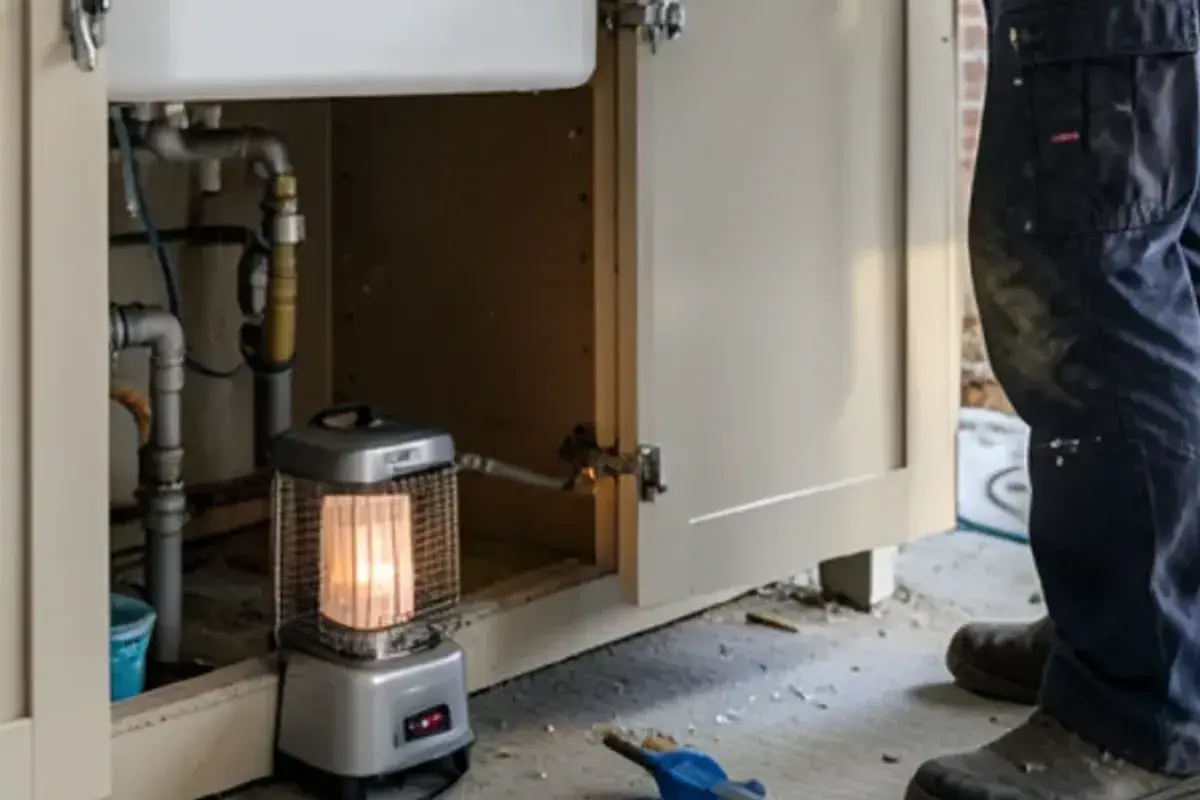
Never an open flame. A torch inside a wall cavity can light the framing, and the fire may smolder out of sight. Fast, concentrated heat can also turn trapped water to steam. The American Red Cross gives homeowners the same rule: no blowtorch, kerosene or propane heater, or open flame of any kind.
When a burst frozen pipe shows up on thaw
As ice grows in a short stretch of pipe, the water trapped between it and a closed faucet has nowhere to go, pressure climbs, and the pipe splits there, often a foot or more from the ice itself. While everything stays frozen, the crack is plugged. When it warms up, it leaks.
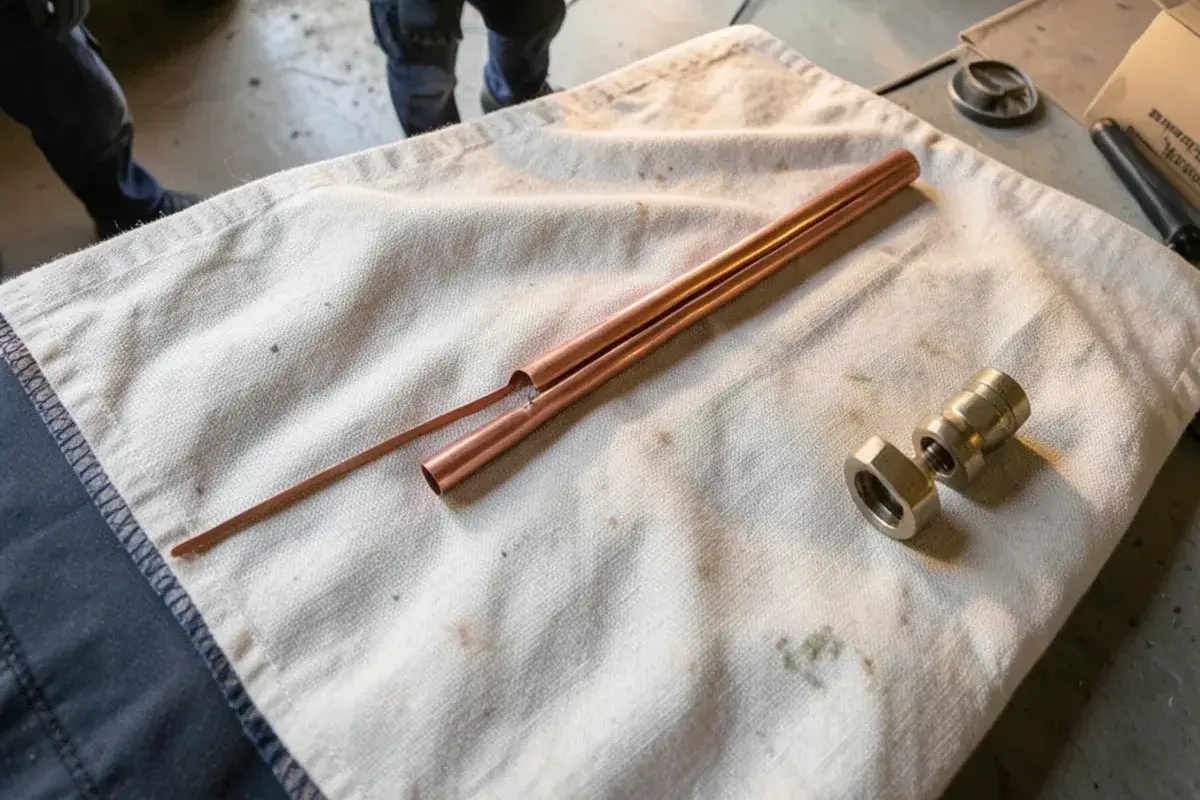
The repair means shutting the water, cutting out the split plus the swollen pipe on either side, and joining in new copper or PEX. If the line sits in a wall that will freeze again, moving it to an interior wall or the basement ceiling is the better fix. Each method is on our pipe repair page, and older homes that keep losing lines to the cold are good candidates for repiping the worst runs. Our post on what to do when a pipe bursts covers cleanup.
The frozen pipe visit, step by step
- You call, say which fixtures have water, which don't, and whether anything is dripping, and we connect you with a local plumber.
- The plumber checks that the main shutoff actually closes before thawing anything.
- The frozen section is located, the faucet it feeds is opened, and controlled heat goes on while someone watches the line.
- Any split gets repaired once the water is off: damaged pipe cut out, new section joined in.
- Water comes back on, every joint is checked under pressure, and nearby lines in the same cold zone get a look.
- The plumber goes over insulation, heat cable or rerouting so the same spot doesn't freeze again.
What affects the cost of frozen pipe repair
- how many lines froze and how many of them split
- access: an open cabinet versus a finished wall, a crawl space or a garage ceiling
- whether drywall has to be opened to reach the frozen run
- the length and material of any replacement pipe
- add-ons such as rerouting a line, insulation or heat cable
- timing, since cold snaps bring a rush of calls and after-hours work costs more
- a permit if the repair replaces or reroutes piping
A kitchen line that comes back once the cabinet is open and warm air goes in sits at the small end. Three runs frozen in a finished garage ceiling, one of them split, with drywall to open and a reroute to plan, is a different job. Ask for the thaw, the repair and any reroute priced separately.
Permits and code rules for frozen pipe repairs in Michigan
Thawing a line generally isn't permit work. LARA's exemption covers repairs to the working parts of a faucet or valve and clearing stoppages, as long as existing piping isn't altered. Cutting out a split section or rerouting a line out of a cold wall does alter the piping, so expect a plumbing permit from the township or city building department. LARA lets a licensed plumbing contractor pull it, or a homeowner doing the work on a single-family house they occupy. Ask who's pulling it, and check the contractor's license number on LARA's online lookup. Underground, local codes set depth: Clinton Township, for example, requires water service at least 5 feet below grade.
Why call Plumbers in Macomb, MI about frozen pipes?
Because ice in one line often means trouble in the next one over, and one number covers every plumbing problem in the house. Call (207) 419-2600 and say which fixtures have water, which don't and whether anything is dripping. We connect you with an independent local plumber who covers your part of Macomb County. This page explains how a safe thaw works, what drives the cost and when a permit applies, so you can ask good questions before a wall gets opened. There's no form to fill out.
Frozen pipe repair: questions we hear
How do I thaw frozen pipes myself?
Open the faucet the line feeds so meltwater can move, then warm the frozen section gently with a hair dryer, heating pad, warm towels or a space heater kept clear of anything that can burn. Never use a torch or any open flame. If you can't find the frozen spot or can't reach it, call before you start opening walls.
My pipes froze and there's no water. What should I do first?
Find the main shutoff and make sure you can close it quickly, because a split often shows up only when the ice melts. Open the dry faucets, raise the thermostat, open cabinet doors on outside walls, and call (207) 419-2600 if water doesn't return or you see a bulge or crack.
Will a frozen pipe burst when it thaws?
Yes, it can, and it may already have. The split forms while the line is frozen, and ice plugs the crack until it melts. That's why a line gets thawed with the faucet open and a hand near the main valve, and why a line that froze hard deserves a close look afterward.
Can a frozen water line coming into the house be thawed?
Yes, often, when the ice is near where the service enters the basement and the line is metal. A frozen meter is a different case, since it usually belongs to the water department, so call them first. Ice deeper in a buried line takes specialized equipment.