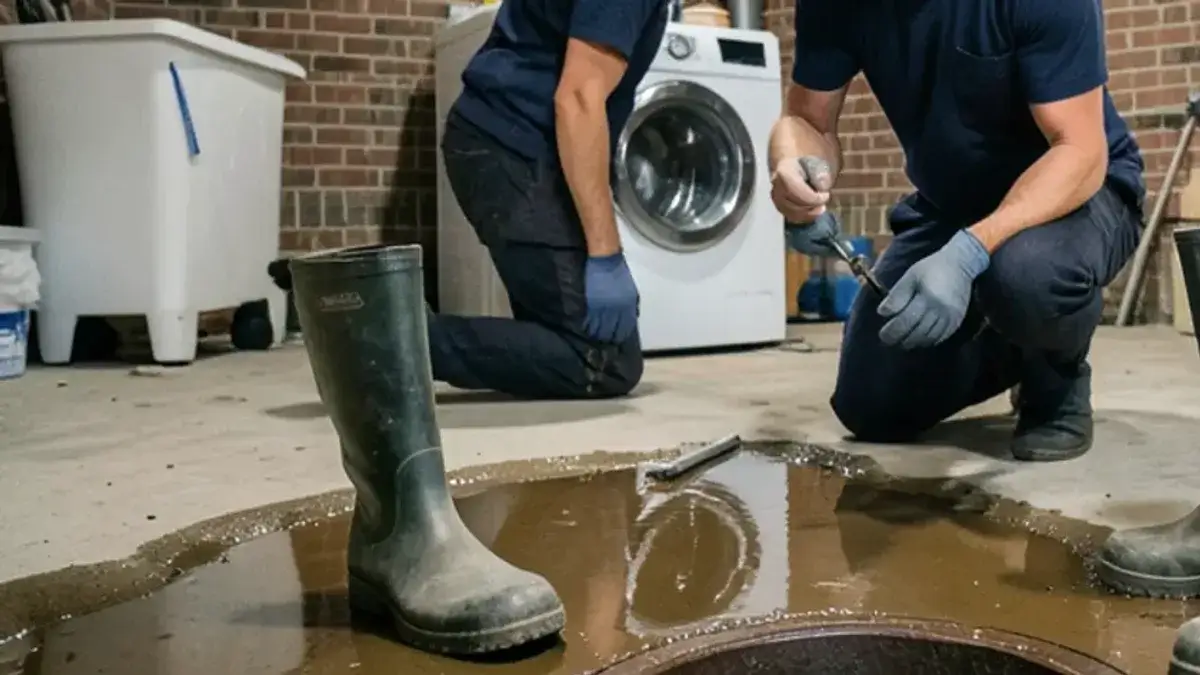
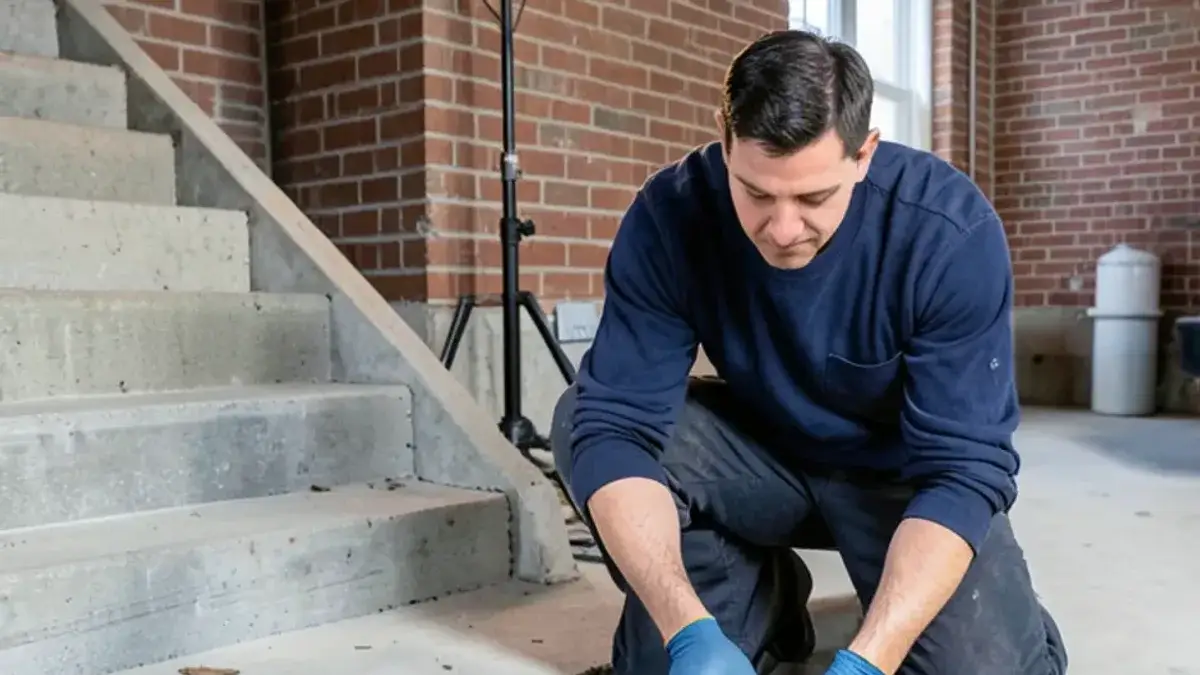
Across Macomb County, three flood-declared storms since 2014 and older combined sewers in the south end keep this question live.
Which water is in your basement?
Prevention works only when it matches the source. Three kinds of water reach Macomb County basements, and many homes see more than one.
Sewer backup is gray or brown, smells, and comes up through the floor drain, a basement toilet or the shower first. It happens during heavy rain when the public sewer fills and pushes back up your lateral, or when your own lateral is blocked.
Groundwater is clear and arrives at the joint where the wall meets the floor, through cracks, or as a pit that can't keep up. Spring snowmelt over frozen ground and long wet spells raise it, and homes near Lake St. Clair tend to sit closer to it.
Surface water runs in at window wells, a walkout door or low spots along the foundation during a downpour. Clogged gutters and short downspouts are the usual culprits.
Big storms can bring all three at once. Federal disaster declarations for flooding covered the county in August 2014, June 2021 and August 2023, and Warren took about 5.2 inches of rain in the 2014 storm. If you're cleaning up right now, our guide on sewage backup in the basement covers the first steps, and wet drywall and carpet should be dried within 24 to 48 hours to limit mold, per EPA guidance.
What a prevention plan can include
The plumber you're connected with starts by naming the source, then matches the work to it. Depending on what the camera and the walk-around show, a plan can include:
- a backwater valve on the main building sewer, with an access riser for cleaning
- repair of a lateral section with roots, cracks or a sag
- rerouting a footing drain that's tied into the sanitary line
- a battery or water-powered backup for the sump pump
- downspout, grading and window well fixes outside
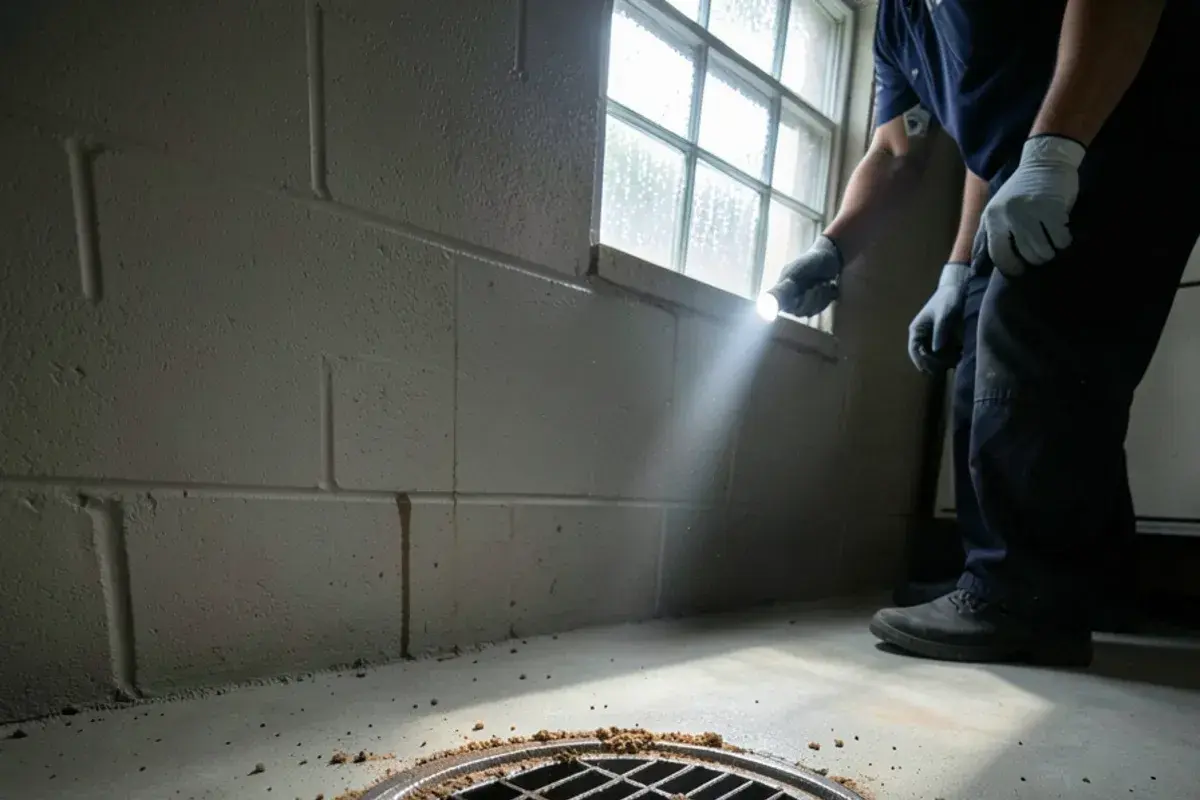
Want the next storm to stay out of your basement?
- Your call goes to an independent local plumbing company that does the work.
Backwater valve installation for sewer backup prevention
A backwater valve sits in the main building sewer, between the house and the street. Water flows out normally through an open flap. When the sewer surcharges and flow reverses, the flap closes and holds the backup out.
Two cautions come with it. While the valve is closed, water you run in the house has nowhere to go, so during a storm you hold off on laundry, showers and flushing. And the valve needs its access cover opened and the flap cleaned on the maker's schedule, because grease or debris can keep it from sealing. Utilities with valve programs, such as Columbus, Ohio, advise checking and cycling it at least once a year.
Cheaper floor drain plugs and float balls protect one drain only. A toilet or shower on the same line can still overflow, which is why a valve on the main line is the stronger option for homes with a history of backups.
Installing the valve, step by step
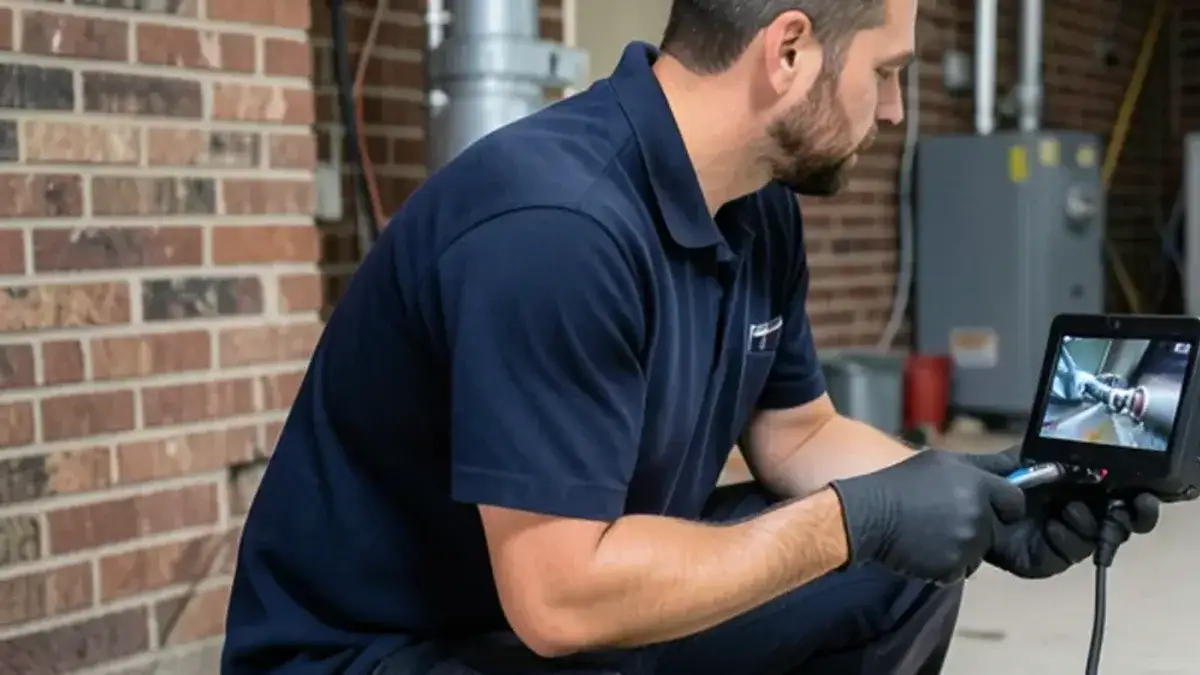
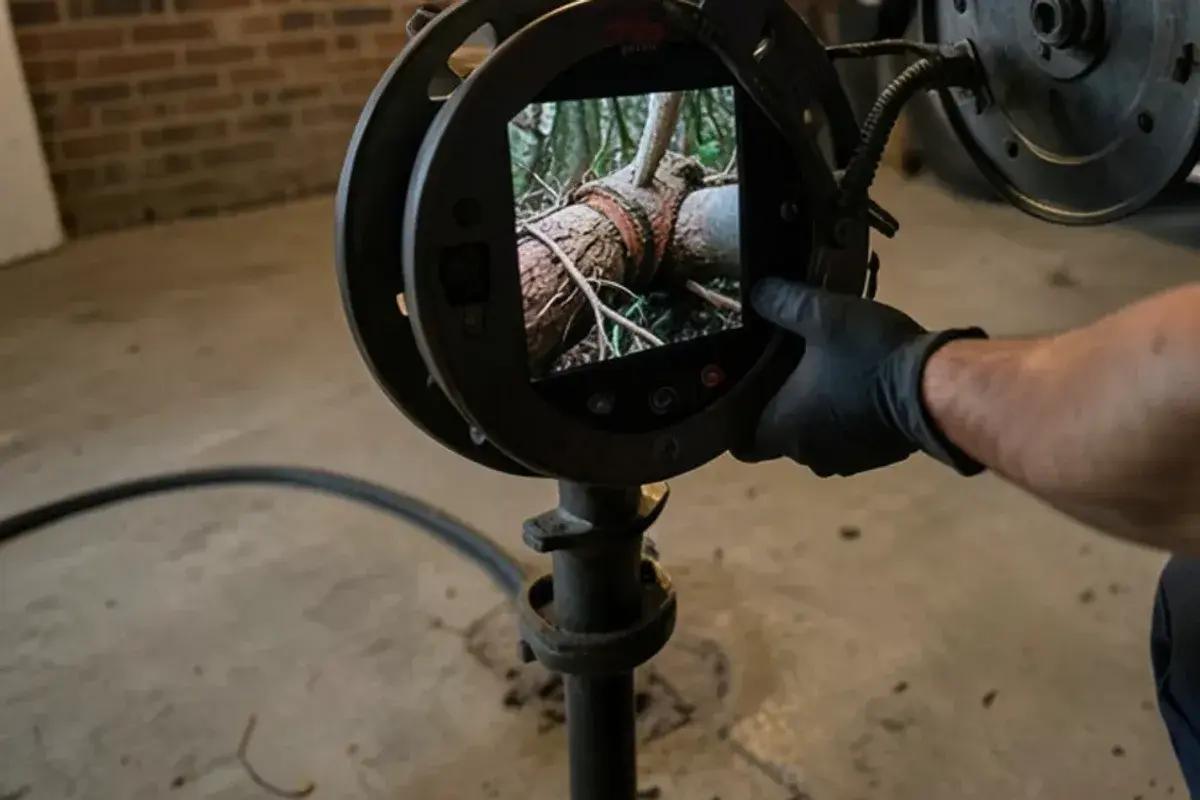
- A camera run locates the main line, its depth and a clean, straight spot for the valve.
- The permit is pulled before work starts.
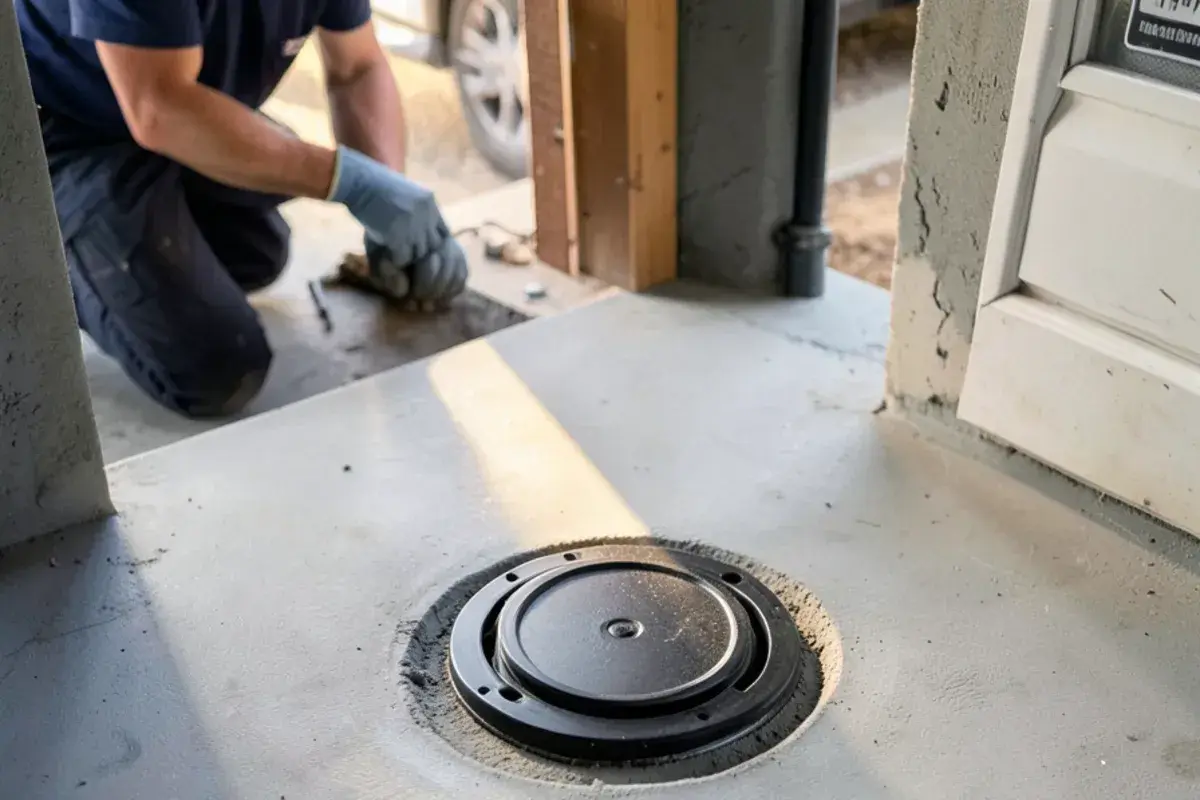
- The floor is saw-cut and broken out over the line.
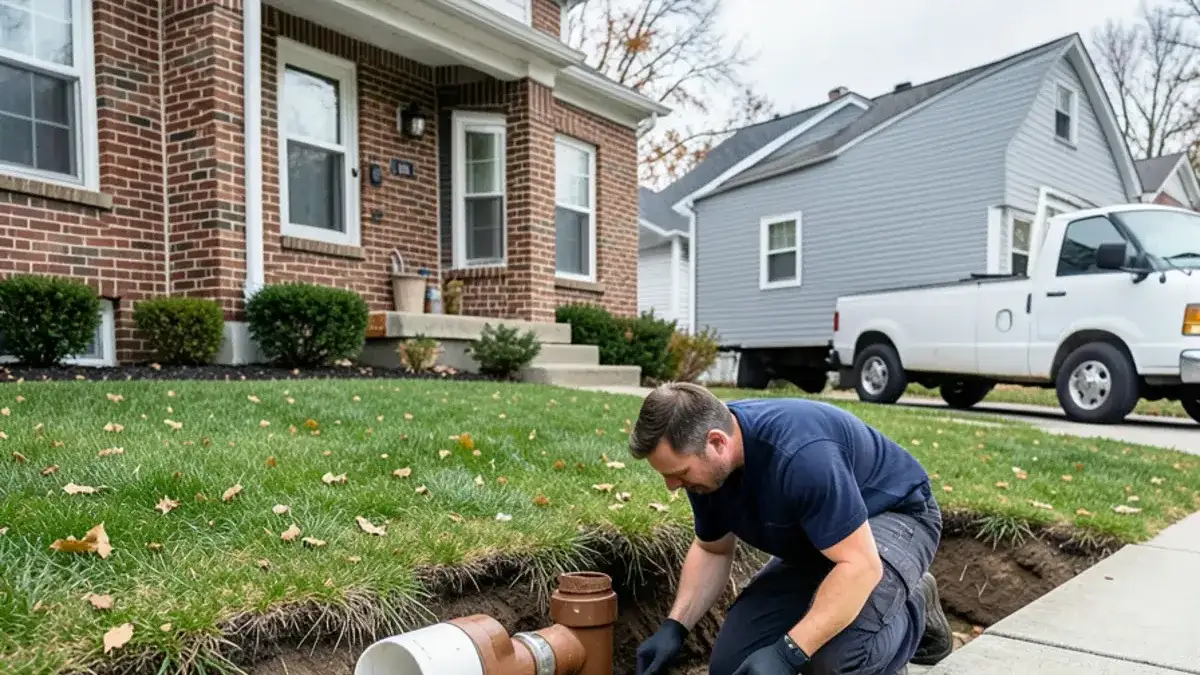
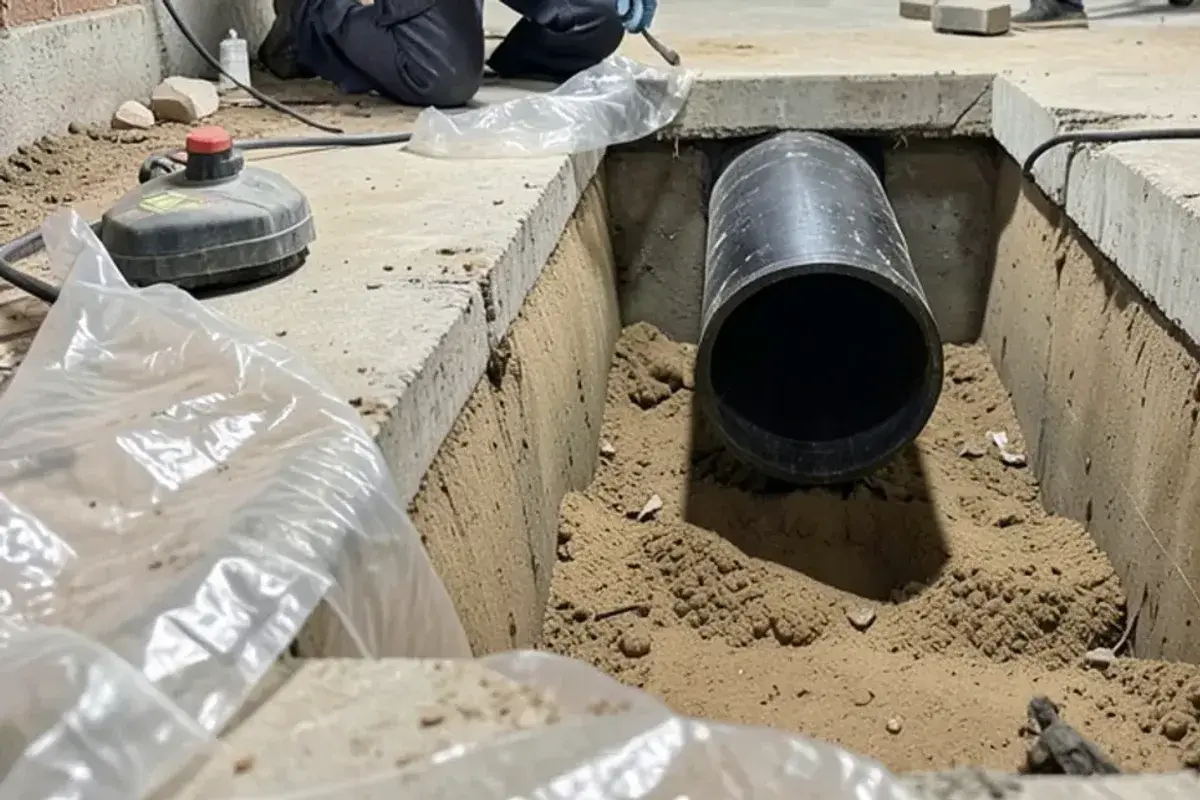
- The old pipe section is cut out and the valve set level, facing the right direction, with an access riser.
- The installation is inspected, then backfilled and patched with new concrete.
- Water is run through the house to confirm flow and flap movement.
Before
After
Permits and the rules behind the fixes
LARA's rule is that plumbing work starts only after the permit is issued, and Macomb Township's fee table lists a backwater valve and a sump as separate permit items. The applicant is either a licensed plumbing contractor or a homeowner working on the home they occupy, and the inspector sees the valve before the floor is patched. Township Code Sec. 15-211 bars stormwater, groundwater and footing drain water from the sanitary sewer, which is why a tied-in footing drain has to be rerouted. Other communities keep their own permit lines; Sterling Heights lists sump-to-storm connections and basement waterproofing separately. Before work is scheduled, get the license number in writing and verify it through LARA's online search.
Is the sewer lateral part of the problem?
A lateral full of roots or with a sagging section backs up into the house with no help from the public sewer. Clay laterals from the 1950s through the 1970s are prone to this, and Clinton Township ran a repair aid program aimed at failed clay laterals in homes built in 1974 or earlier. A sewer camera inspection shows whether that's what you're dealing with, and sewer line repair fixes the section at fault.
The public system matters too. Older communities in south Macomb County, including Eastpointe, St. Clair Shores and Roseville, drain to combined sewer basins run by the county, and the Mount Clemens treatment plant holds a combined sewer overflow permit. Systems that carry storm and sanitary flow together load up fast in a downpour. Macomb Township sits on the separated system, but any sewer can surcharge in an extreme storm.
Footing drain and sump pump backup planning
Footing drains collect groundwater around the foundation. In newer homes they feed a sump pit. In some older homes they were tied straight into the sanitary lateral, which puts groundwater into the sewer during the exact storms when the sewer is fullest. Macomb Township's ordinance bans stormwater, groundwater and subsurface drainage from the sanitary sewer, so rerouting a tied-in footing drain to a sump is both a fix and a code issue.
Once the water goes to a pit, the pit needs redundancy. A sump pump backup, either battery or water-powered, keeps running when the main pump or the power fails. Details on pump choices and pit work are on our sump pump repair and installation page.
Keeping roof and yard water off the foundation
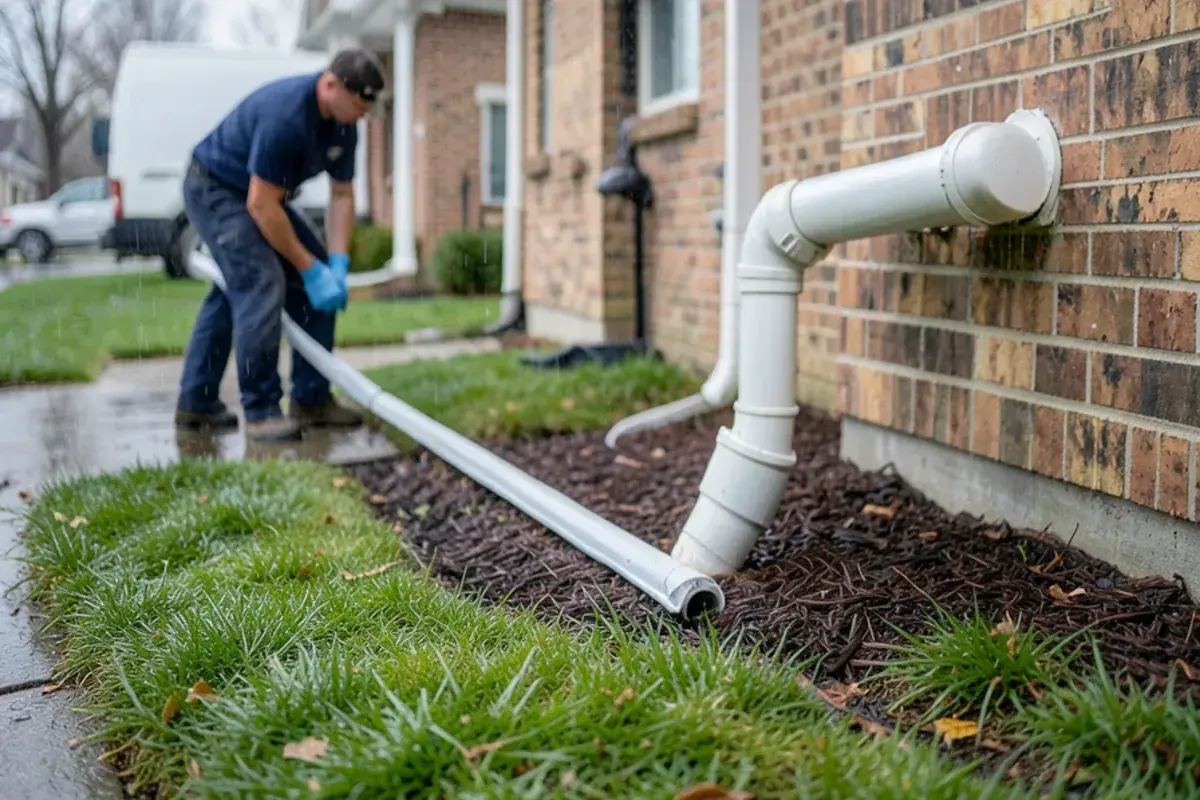
Roof runoff is the cheapest water to stop. A single downspout drains a big piece of roof, and if it empties beside the foundation, that water soaks down to the footing drains and into the pit. Extend downspouts several feet out, set splash blocks, and reshape soil so it slopes away from the walls. Window well covers keep a storm from filling a well against the glass.
Much of this is weekend work for a homeowner, but the plumber you're connected with can point out what they see while outside checking the sump discharge.
What basement flooding prevention costs depend on in Macomb County
Each house gets a different mix of fixes, so cost follows the plan. An inside valve on a shallow main under a bare floor is the simpler job; a deep line, a finished basement or a valve set out in the yard means more cutting, digging and restoration. The camera visit usually comes first, and the valve install is often a separate scheduled day because of the permit and the concrete patch. The main drivers:
- Which water sources the assessment finds
- Depth and location of the main sewer line
- Slab thickness, floor finishes and access in a finished basement
- Valve type and whether it goes inside or in the yard
- Lateral defects that need repair before or with the valve
- Rerouting a footing drain tied into the sanitary line
- Sump backup type
- Permit fees and concrete restoration
- Digging outside, which requires notice to MISS DIG 811 at least three business days ahead
Insurance and the 45-day claim window
If a backup came from the public sewer, Michigan law sets a short deadline. Macomb Township tells residents to file a written claim within 45 days of discovering a sewer backup, and missing the notice prevents recovery. Backups caused by sump or downspout connections, or by a blockage in your own lateral, are excluded. Photograph everything before cleanup and keep any camera footage from the visit.
Valve and pump makers offer their own limited warranties, which vary by product. Keep the paperwork with the permit card.
Why call Plumbers in Macomb, MI before the next storm?
After a flood, most people want to know two things: where the water came from and what will stop it. Plumbers in Macomb, MI runs a referral line, one number for every plumbing problem, from a gurgling floor drain to a dead sump pump. Call (207) 419-2600, describe what came in and when, and we'll connect you with an independent local plumber serving your city or township. That plumber cameras the line, looks at the sump and the yard, and quotes the fixes in order of effect. This page explains each fix, the cost drivers and the permits, so you can weigh the plan before you sign. No online forms; a phone call starts it.
Basement flooding prevention: questions we hear
Do I need a backwater valve if I already have a sump pump?
Yes, if sewage has ever come up the floor drain. They solve different problems. A sump pump removes groundwater that collects around the footings. A backwater valve keeps sewage from flowing backward into the house when the public sewer surcharges. A home with both risks needs both, and one can't stand in for the other.
Does homeowners insurance cover a sewer backup in Michigan?
No, not under a standard policy. Michigan's Department of Insurance and Financial Services says damage from a sewer backup or sump overflow is typically not covered by a standard homeowners policy unless you add an endorsement. Flood insurance is a separate product again. Read your declarations page or ask your agent before the next storm season.
Does a backwater valve need a permit in Macomb Township?
Yes. Backwater valves have their own line in the township's plumbing permit fee table. Michigan lets a licensed plumbing contractor pull that permit, or an owner doing the job in the single-family house where they live, and the valve has to pass inspection before the floor is closed.
Will one camera inspection tell me everything?
No. It tells you the condition of the lateral, where it runs and how deep it sits, which decides where a valve can go. It won't show groundwater seeping through walls or a downspout dumping at the foundation, so the visit covers those separately.