
Emergency guides
Sewage backup in the basement: what to do first
A sewage backup in the basement is a health problem before it's a plumbing problem. Here's how to keep people safe, stop feeding the backup, and work out whose pipe is to blame.
By Plumbers in Macomb, MI · Published · Last updated
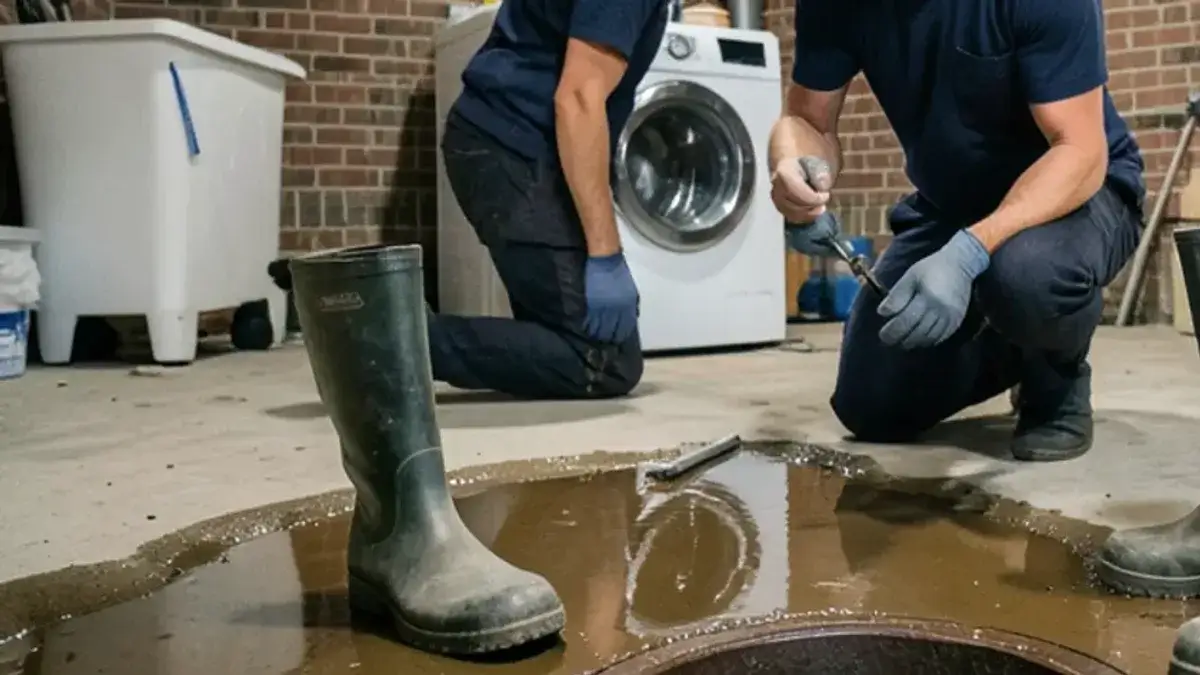
With a sewage backup in the basement, stop using every drain in the house, keep people and pets out of the water, and cut basement power only if you can reach the panel on dry floor. Then photograph the damage, call to have the main line opened, and report the backup to your community before its claim deadline.
Stop running water and keep people out
Sewage usually surfaces at a floor drain, a basement toilet or the laundry standpipe, because those are the lowest openings in the plumbing. Whatever is blocking the line downstream, everything that drains in the house now has only one place to go. Raw sewage carries bacteria and viruses, and the basement air will smell bad for good reason. Keep children and pets upstairs. Nobody should step into it without rubber boots and gloves, and nobody with an open cut should be down there at all.
Then stop adding to it. Tell everyone in the house not to flush, shower, run the dishwasher or start a load of laundry until a plumber has opened the line. A single washing machine drain cycle can push dozens of gallons onto the floor.
Two more safety checks:
- Electricity. If the water could reach outlets, cords or a freezer, shut off basement circuits at the panel, but only if you can get there on dry floor.
- Gas appliances. If the water reached the furnace or water heater burners, have them checked before you run them again.
Is it only your house? Step outside or text a neighbor. If houses up and down the street have water in their basements, the problem is probably in the public sewer, and the community needs to hear about it fast.
Floor drain backing up? Have the sewer line opened and checked
- Your call goes to an independent local plumbing company that does the work.
Is it your lateral or the public sewer?
The pipe that carries waste from your house to the sewer main in the street is called the lateral, or building sewer. Across most of Macomb County, that pipe is the owner's to maintain, at least up to where it joins the public line. Ask your community where its line of responsibility sits, because the answer decides who pays to clear it.
These clues usually point one way or the other:
| What you notice | Points to your lateral | Points to the public sewer |
|---|---|---|
| Only your house has a backup | Likely | Less likely |
| Neighbors have backups at the same time | Less likely | Likely |
| It rises when you run water and stops when you stop | Likely | Less likely |
| It rises during a heavy storm with no fixtures running | Possible if clear water drains into your line | Likely |
| You've had slow drains or gurgling for weeks | Likely | Less likely |
| Wipes, grease or roots come out when the line is opened | Likely | Rarely |
Storms matter here. Parts of southeast Macomb County, including St. Clair Shores, Eastpointe and Roseville, are served by combined sewers that carry stormwater along with sewage, and the county runs retention basins to handle heavy flows. When those systems fill up in a downpour, low drains in nearby basements feel it. County Public Works has said plainly that the sewers in St. Clair Shores and Eastpointe, two of the county's oldest communities, become overwhelmed in heavy rain. The rebuilt Chapaton Retention Basin at the foot of Nine Mile Road, unveiled in September 2025, raised its storage from about 3 million to 17 million gallons, which helps the system as a whole but does nothing for a root-choked lateral under one front yard.
What a plumber does to find the answer
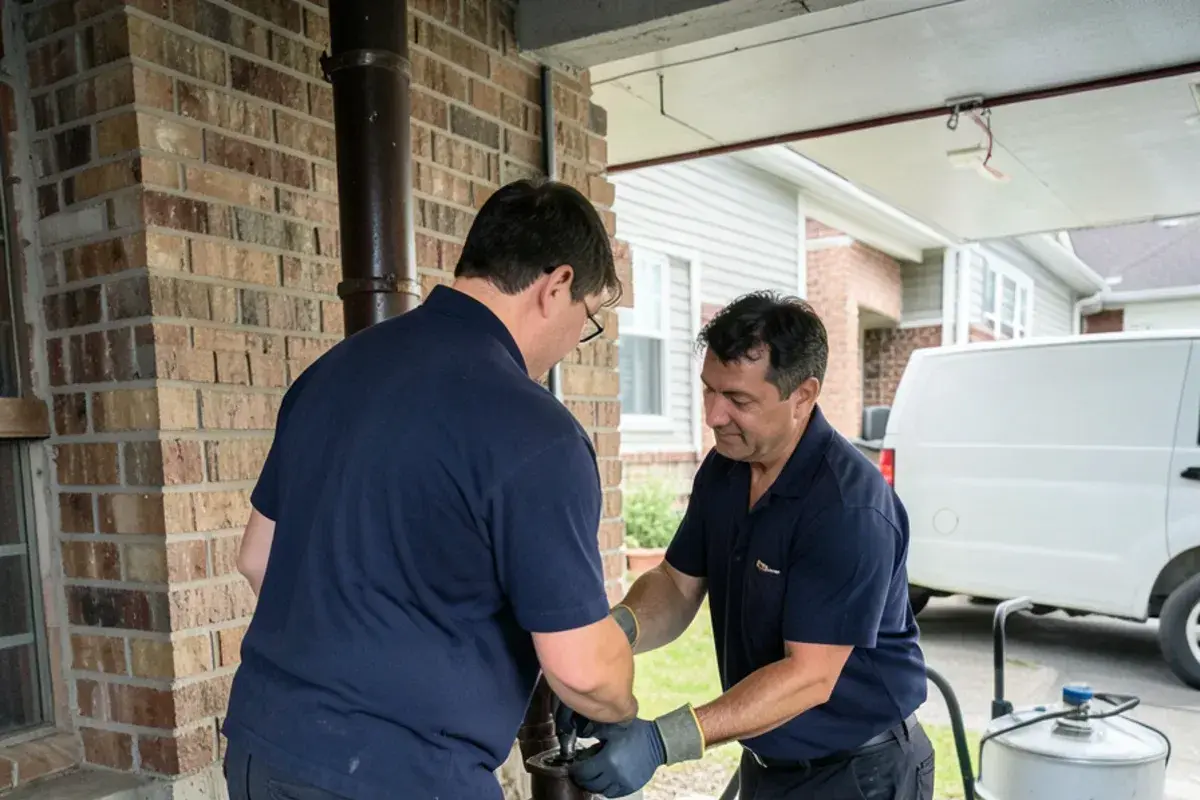
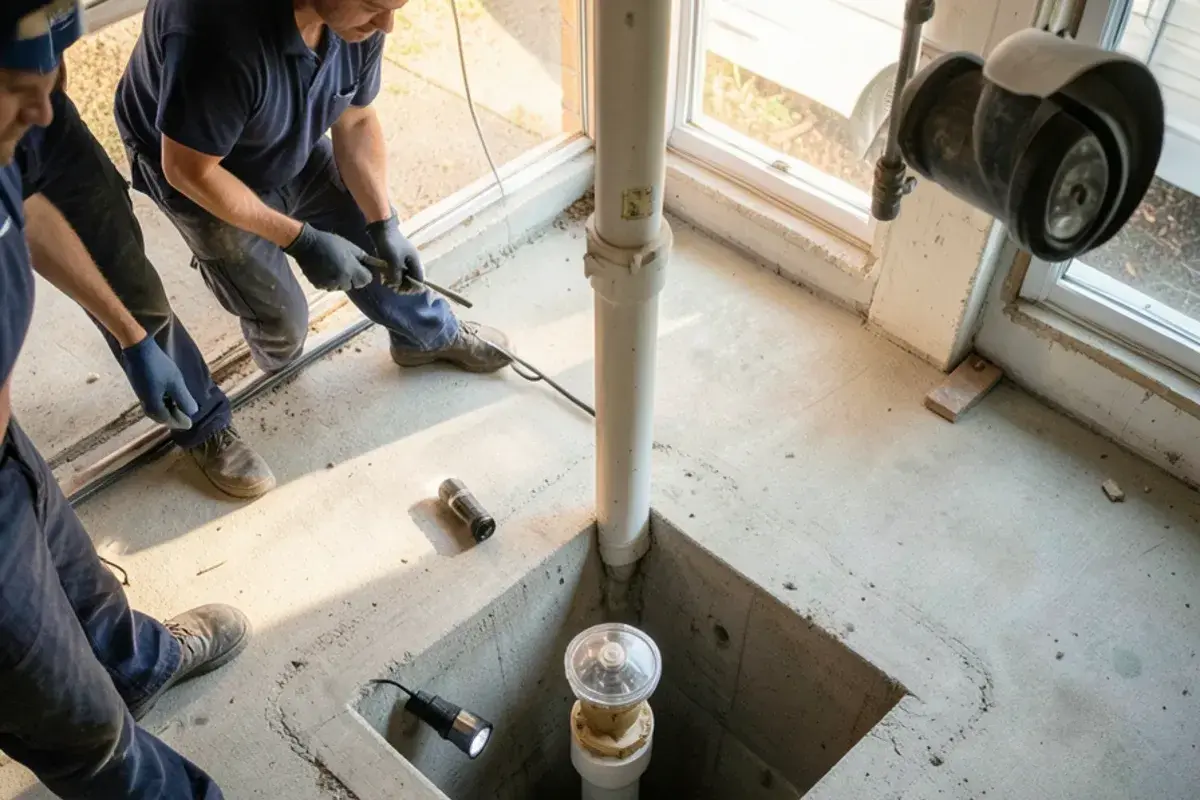
The plumber opens the main cleanout, usually on the front wall where the stack meets the floor, and runs a cable toward the street. Don't open that cap yourself during a backup. It can release a column of sewage the moment the threads let go.
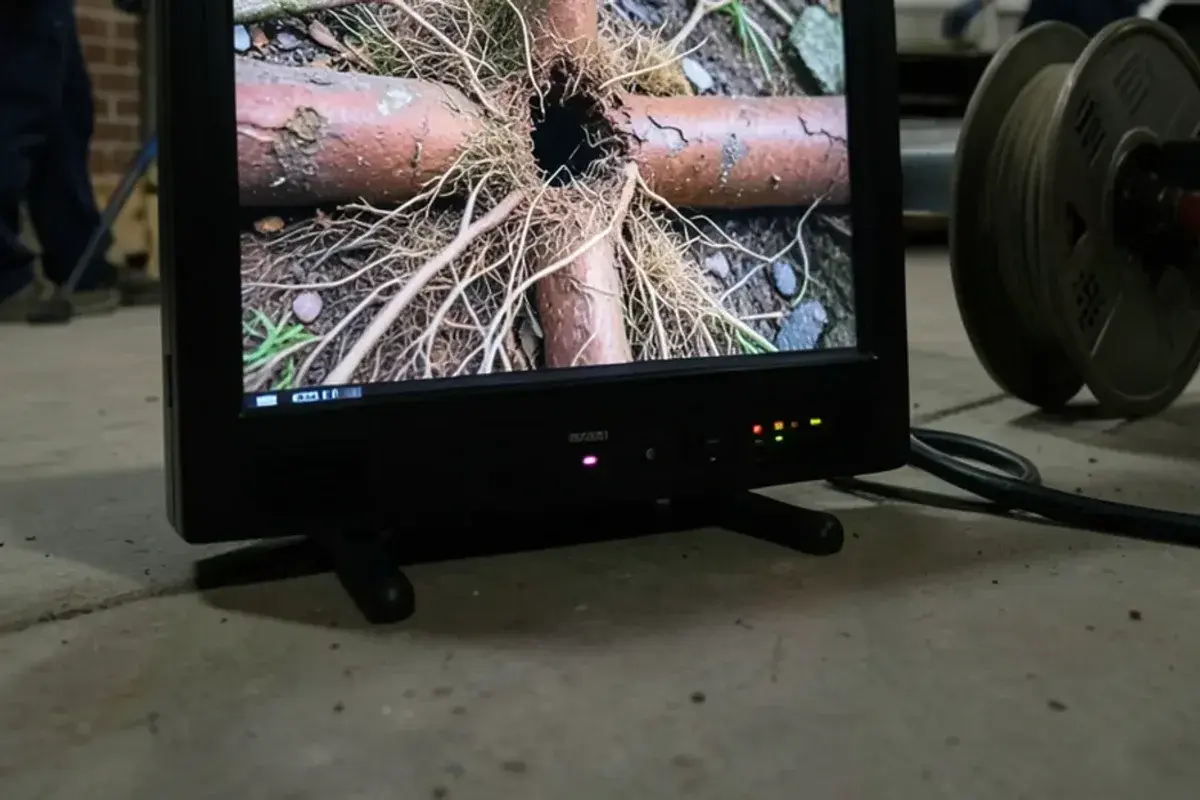
If the cable clears a clog in your lateral, the water drains and you can see what came back on the cutting head. A camera run then shows why it happened: roots in a clay joint, a cracked or sagging section, or grease narrowing the pipe. Our sewer camera inspection page explains what that video shows, and sewer line repair covers fixing a broken or root-filled lateral. If the line is clear all the way to the main, the backup is coming from the public side.
Report it to your community right away
Michigan's Public Act 222 sets how homeowners claim damages from a public sewer backup, and the deadline is short. In Macomb Township, the township tells residents to call its Water and Sewer department and to put a written claim in no later than 45 days after the backup is found. The township's annual water quality report lists the department's numbers and warns that missing the notice will prevent recovery of damages. Other communities follow the same state law with their own forms. St. Clair Shores, for example, takes backup reports through its public works department and claim forms through the city's online "File a Claim" page. Call yours even if you think the problem is on your side.
The law excludes some causes. A blockage in your own lateral that the community didn't cause is one. A backup driven by a sump pump, downspout or other clear water connection tied into the sanitary line is another.
Call your insurance agent before the cleanup starts, and ask whether your policy has a sewer backup endorsement, since many don't.
Cleaning up after sewage safely
Before you clean, take photos of the water, the drain it came from, and every damaged item. Then follow these rules:
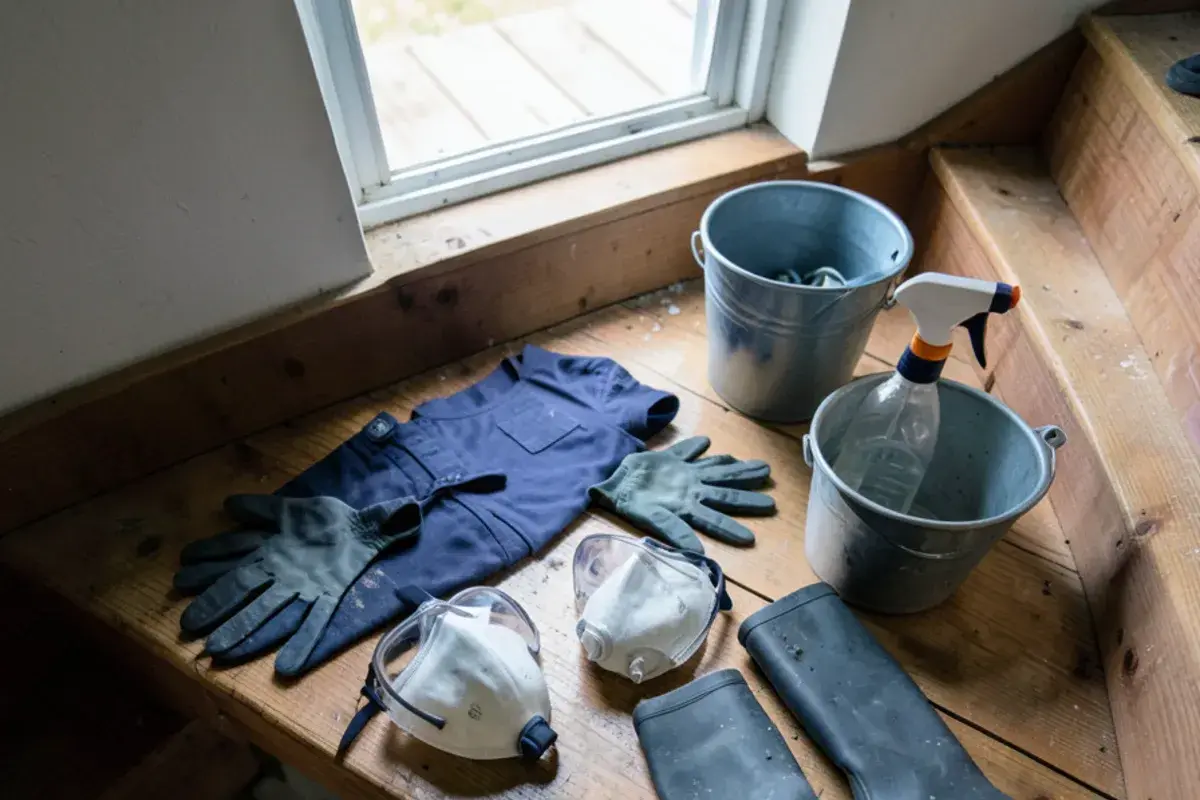
- Wear gloves, boots, eye protection and a mask the whole time.
- Remove standing water with a pump or wet vac, not a household mop and bucket you plan to keep.
- Throw out porous things the sewage touched: carpet and pad, drywall below the waterline, insulation, cardboard, upholstered furniture.
- Scrub hard surfaces with detergent and water, then disinfect.
- Dry the space with fans and a dehumidifier, and keep the area closed off from the rest of the house.
- Wash work clothes separately and wash your hands before eating.
The EPA's 24 to 48 hour drying guidance is written for clean water. Sewage needs protective gear and containment on top of that, which is why large cleanups belong with a restoration company.
Preventing the next backup
Once the line is open and you know the cause, there are a few ways to cut the odds of a repeat.
A backwater valve on the main sewer line closes when sewage flows back toward the house. Macomb Township's plumbing permit fee schedule lists backwater valves, so installing one there is permitted work.
Clear water belongs outside the sanitary sewer. Macomb Township's code bans sending stormwater, groundwater, roof runoff or subsurface drainage into it, which rules out a sump pump or footing drain piped to a floor drain.
Roots come back. A clay lateral that was full of them once will be again, so plan a cleaning schedule or a repair.
Our basement flooding prevention page compares backwater valves, sump backups and drain fixes in more detail.
What plumbers usually find once the line is open
After the cable goes in, the cause tends to fall into a handful of groups. Wads of wipes sold as flushable are a frequent one, often snagged at a rough joint or the first bend past the cleanout. Roots are the other big one in older neighborhoods. In St. Clair Shores, more than half the homes were built between 1940 and 1959, the era of clay and cast-iron laterals, and roots find every joint in those. Grease settles in a sag, or belly, where the pipe has dropped and holds water. Now and then the cable stops at an offset joint or a collapsed section and can't get through at all.
What each fix can and can't do
A cable punches a hole through the blockage and gets the house draining, which is the right first move during a backup. It leaves root stubs and grease on the pipe walls, so the clog can return within months. Jetting cleans the walls more thoroughly, but on a cracked clay pipe the plumber may hold back until a camera shows what it's working against. Neither one fixes a belly or a broken joint. Those need a spot repair or a new section.
A backwater valve has limits too. It stops the public sewer from pushing back into the house, but it can't help with a clog in your own lateral. While the valve is closed during a storm, water you run upstairs has nowhere to go, so the house still has to go easy on the drains until the street sewer drops. The flap also needs an occasional look through its access lid, because debris can hold it open.
Before you make the call
Have a few answers ready, because they decide what the plumber brings. Say which drain the sewage came up through, whether neighbors have it too, whether it rained hard in the last day, and when the main line was last cleaned or camera-inspected. Mention any cleanout you know of, inside or out. Then call (207) 419-2600, and we'll connect you with a local plumber who covers your street and can open the line.
Common questions
Can I clean up a sewage backup myself?
Yes, if it's small and on bare concrete. That's something many people handle with gloves, boots, eye protection and a disinfectant. Once sewage soaks carpet, drywall or stored belongings, or covers more than a small area, a water restoration company with the right equipment is the safer choice. Anyone with a weak immune system should stay out.
Will my homeowners policy pay for sewer backup damage?
No, not usually. According to Michigan's insurance regulator, DIFS, a standard homeowners policy typically leaves out damage from a backed-up sewer or an overflowing sump unless you bought an add-on endorsement. Flood insurance is a separate thing. Check your policy and call your agent the day it happens.
How long do I have to report a sewer backup in Macomb Township?
Under Michigan's Public Act 222, the township's water quality report gives you 45 days from the day you find the backup to get a written claim in, and it warns that late notice will prevent recovery of damages. Call the township's Water and Sewer department first, then put it in writing.
Where we can help
Floor drain backing up? Have the sewer line opened and checked
- Your call goes to an independent local plumbing company that does the work.