
Rules and permits
Do you need a plumbing permit in Michigan?
Under Michigan law, most plumbing work needs a permit before it starts. A short list of repairs is exempt, and that list is narrower than many people assume.
By Plumbers in Macomb, MI · Published · Last updated
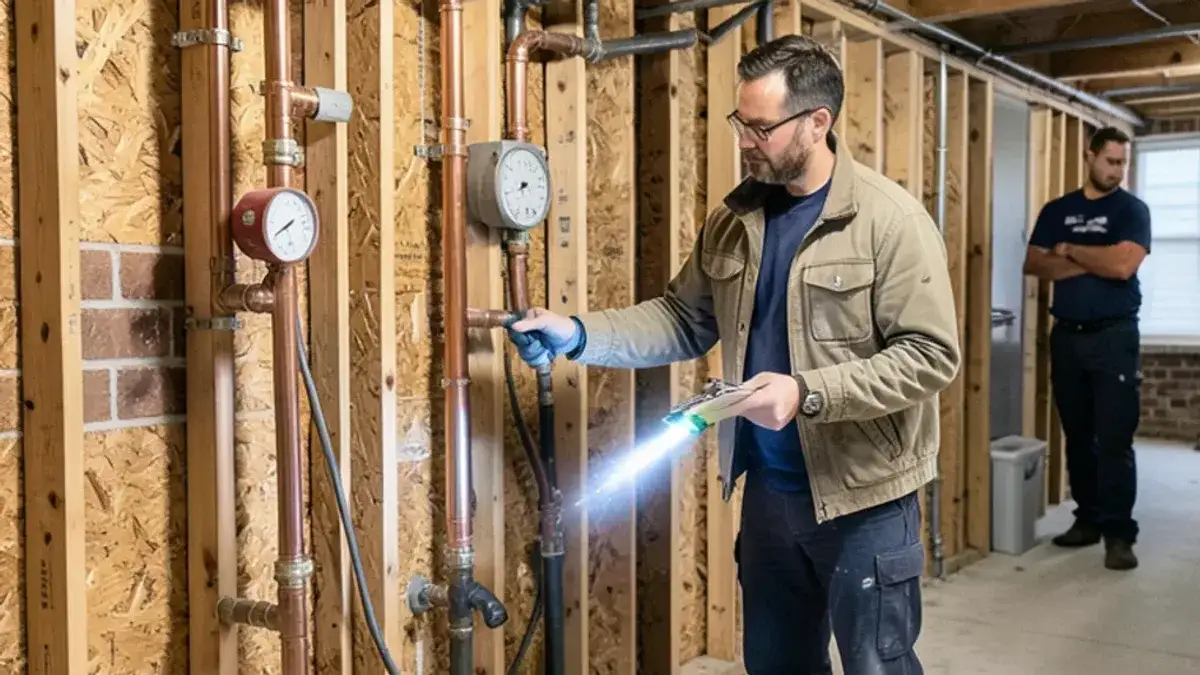
Yes, for most jobs. Michigan law says plumbing work can't start until the local enforcing agency issues a permit. The one exemption covers repairs to the working parts of a faucet or valve and clearing stoppages, with no change to the piping or fixtures. Water heaters, repipes, new fixtures and sewer work all need one.
The codes and who enforces them
The rule itself, in LARA's words, is that "plumbing work shall not be started until a permit for such work has been issued by the appropriate enforcing agency." This guide explains the exemption, the common jobs that need a permit, who can pull one, how inspections work in Macomb County, and how to check a contractor's license.
Michigan's 2021 Plumbing Code and 2021 Mechanical Code took effect March 12, 2024. Houses and duplexes are governed by the Michigan Residential Code, which has its own plumbing and mechanical chapters.
Enforcement can sit with the state, the county or the local unit of government. In Macomb County, most communities run their own building departments, including Macomb Township, Sterling Heights, Shelby Township and Clinton Township. LARA keeps a statewide jurisdiction list if you're unsure which office handles your address. Your permit goes to that office.
Planning a plumbing project and unsure about the permit?
- Your call goes to an independent local plumbing company that does the work.
What the exemption actually covers
LARA's exact wording is: "A permit is not required for repairs which involve only the working parts of a faucet or valve or clearance of stoppages provided alterations are not made in the existing piping or fixtures."
In plain terms, that covers replacing a faucet cartridge, a washer, a valve stem or its packing, and clearing a clogged drain. The condition at the end matters. Once you cut, move, add or replace pipe, or swap out a fixture, you're outside the exemption.
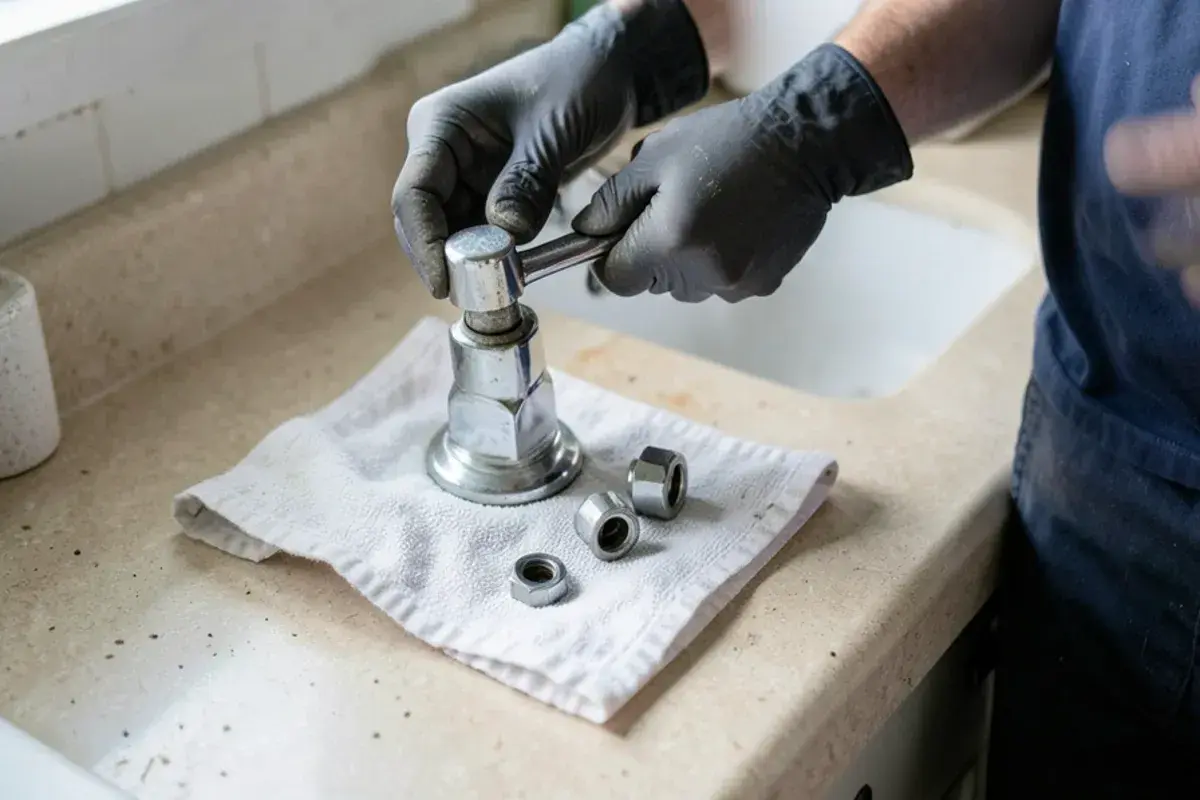
People often stretch this to "leak repairs don't need a permit." The wording doesn't say that. A dripping faucet fixed with a new cartridge fits. A pinhole leak fixed by cutting in a new section of copper doesn't.
Common jobs and the permit question
| Job | Permit? | Why |
|---|---|---|
| Replacing a faucet cartridge or valve stem | No | Working parts of a faucet or valve |
| Clearing a clogged drain | No | Clearance of a stoppage |
| Replacing a water heater | Yes | Macomb Township lists it on its permit fee table; Utica and Harrison Township require one |
| Adding an expansion tank | Yes | Macomb Township's fee table gives it a separate line |
| Repiping or adding water lines | Yes | Alters the existing piping |
| Finishing a basement bathroom | Yes | New fixtures, drains and vents |
| Installing a sump pump or water-powered backup | Yes | Both appear on Macomb Township's fee table |
| Replacing a sewer lateral or water service | Yes | Also needs a MISS DIG 811 ticket before digging |
| New or altered gas piping | Yes, mechanical | Gas falls under the mechanical code and license |
When a job isn't on the list, call your building department and describe it. A short call beats guessing.
Who can pull a plumbing permit
LARA allows two kinds of applicants: a licensed plumbing contractor, or a homeowner installing plumbing in their own home. A contractor's application carries both the contractor license number and the license number of its master plumber.
The homeowner route is narrower than it sounds. Macomb Township's affidavit has the homeowner state the work will be installed "by myself in my own single family dwelling in which I am living or about to occupy." That rules out rentals, flips and helping a relative with their house. LARA also lets a permit for a building sewer or water service alone go to someone other than a licensed contractor, but local rules can add requirements, so check with your building department first.
Some cities add their own step. Sterling Heights, for example, has contractors register with the city before pulling permits there.
How inspections work
The sequence in most Macomb County offices runs like this:
- Apply for the permit, online or at the building department, and pay the application and per-fixture fees.
- Post the permit card at the job.
- Call for a rough-in inspection once the new piping is in and under test, before anything is covered.
- Fix anything the inspector flags and schedule a re-inspection if needed.
- Call for the final inspection when fixtures are set and working.
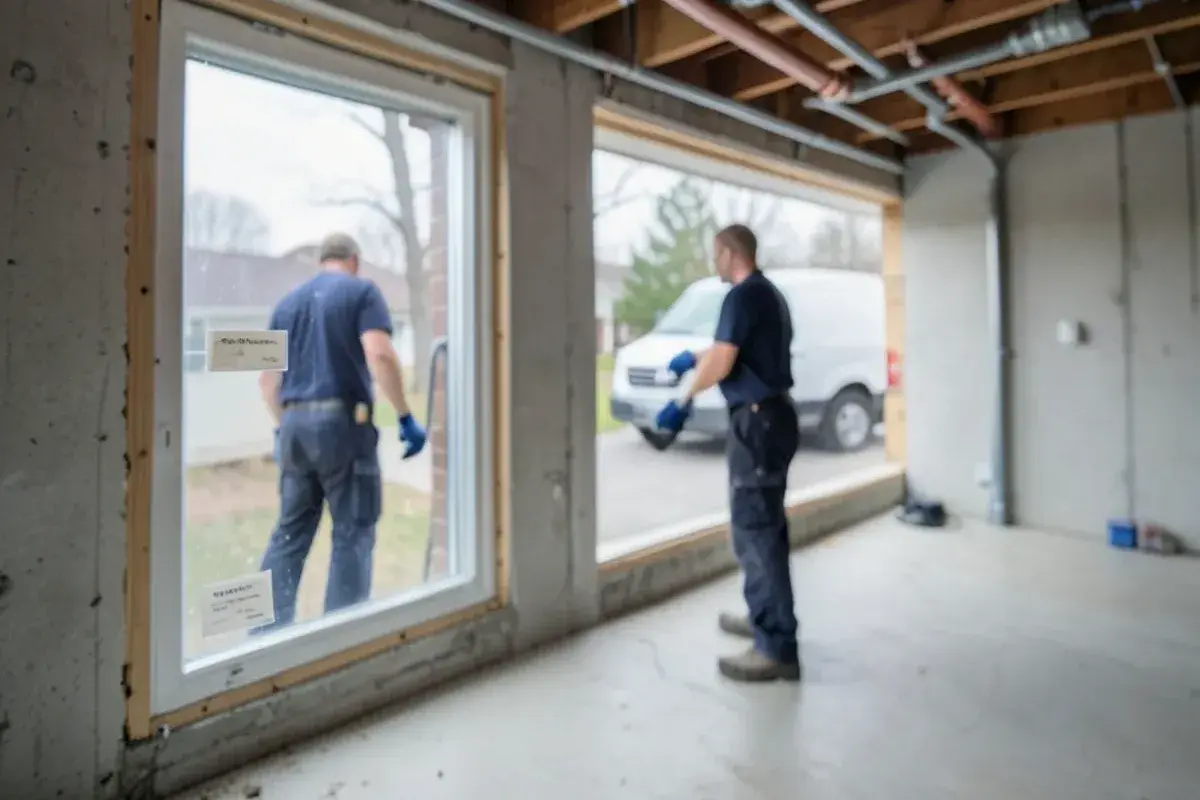
Macomb Township's application is explicit that nothing gets covered before the inspector signs off, so drywall waits for the rough-in. Sterling Heights schedules inspections online. Permits also expire: Macomb Township voids a permit when six months pass with no work started, or when work halts for six months.
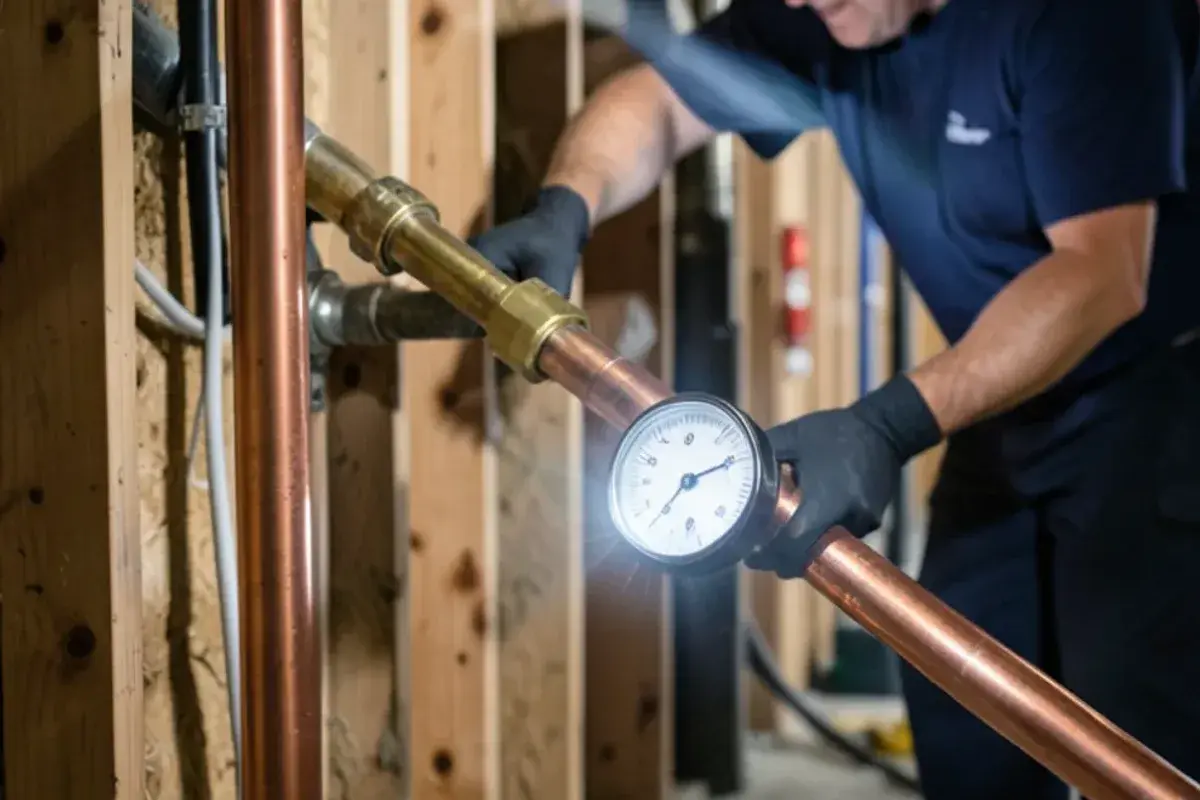
For a project like repiping or a sewer line replacement, expect at least two inspections. A straight water heater installation usually gets one final inspection covering the venting, gas connection and relief valve piping.
How to check a license on LARA
Michigan licenses plumbers in tiers. A journey plumber needs at least 6,000 hours over three or more years as a registered apprentice. A master plumber needs 4,000 hours as a journey plumber over at least two years. A plumbing contractor must hold, or employ, a master plumber.
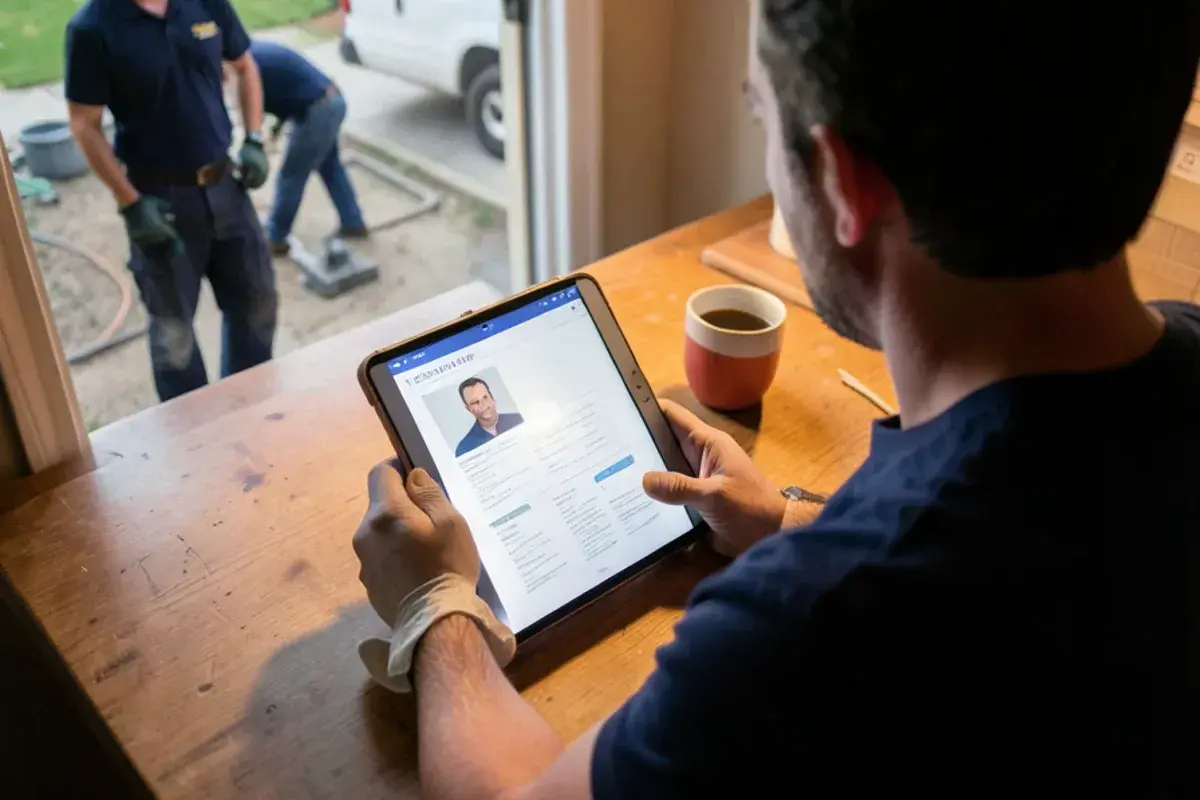
To check one, use LARA's "Find / Verify a BCC Licensed Professional or Business" search, linked from the Bureau of Construction Codes pages under "Verify a License." Search by business name or license number, and look at three things: the license type, whether it's active, and the expiration date. For gas piping, look for a mechanical contractor license with the HVAC equipment or a fuel gas piping classification instead. A plumbing license alone doesn't cover gas.
What happens when work is done without a permit
If an inspector learns of unpermitted work, the usual path is a stop until a permit is issued, then an inspection of what's there. Macomb Township's fee table includes a penalty for work started without a permit, on top of the normal fees. If the work is already behind drywall, the inspector can ask for it to be opened.
Unpermitted plumbing can also surface later, when a buyer's inspector or a municipal record raises questions during a sale. The cleanest fix is to apply, describe the work honestly, and let it be inspected.
What plumbers see on permit jobs, and where homeowners get tripped up
An inspection checks the work against code minimums at the moments the inspector is on site. It doesn't judge how neat the work is, whether the price was fair, or anything outside the permit's scope. A passed final means the work met code when it was seen. It isn't a warranty, and it doesn't cover a fixture added later without a permit.
Water heater swaps are where permits surprise people most. A tank that was installed decades ago may have a relief valve pipe that ends too high, no expansion control behind a check valve or PRV, or venting that no longer matches the new unit. The inspector looks at the whole installation as it stands, so the replacement often brings those items up to current code. That's a reason quotes for the same tank can differ.
Homeowner permits carry real weight. When you sign the affidavit, you're the one scheduling inspections, keeping the work open until the rough-in passes, and correcting anything flagged. That route suits a confident homeowner adding a laundry sink. It suits a full basement bathroom much less, because drain slope and venting under a slab are hard to fix after the concrete goes back.
Old unpermitted work is the hardest case. A basement bathroom roughed in under the floor years ago can't be seen, so an inspector may ask for a test or an opened section before signing off. Expect that conversation before you buy fixtures for it.
Before you start a plumbing project
Check whether the job fits the narrow exemption, call the building department that covers your address, and decide who will pull the permit. If you hire someone, look up the license on LARA and make sure the permit is in the contractor's name. If you live in Macomb Township, Sterling Heights or a community nearby, call (207) 419-2600 and we can tell you which building department handles your address, then connect you with a local plumber who covers it.
Common questions
Does swapping out a water heater require a permit in Michigan?
Yes, in most communities. A new water heater goes well beyond faucet and valve parts, and Macomb Township, Utica and Harrison Township all treat it as permitted work with an inspection. The inspector looks at the relief valve discharge pipe, the venting and the gas or electrical connection, which is why a straight swap still gets a final inspection.
Are Michigan homeowners allowed to pull their own plumbing permit?
Yes, if they're doing the work themselves on a single-family house that is, or soon will be, their own residence. Macomb Township has homeowners sign an affidavit saying so. A landlord or house flipper can't use a homeowner permit for a rental or resale, and the homeowner takes on the same inspection duties a contractor would.
Is fixing a leak exempt from a permit?
No, not as a rule. LARA's exemption is limited to faucet and valve internals plus clog clearing, and only when no pipe or fixture is altered. Splicing new copper into a leaking line is an alteration, so it falls outside the exemption. Tightening a packing nut or replacing a cartridge to stop a drip still fits within it.
Does replacing a toilet need a permit in Michigan?
Yes, under the state's wording, since the exemption stops at the working parts of a faucet or valve and a new toilet is a new fixture. Macomb Township's fee table lists water closets as a per-fixture item. Some departments handle a like-for-like swap more loosely, so call yours and describe the job before you start.
Where we can help
Planning a plumbing project and unsure about the permit?
- Your call goes to an independent local plumbing company that does the work.